

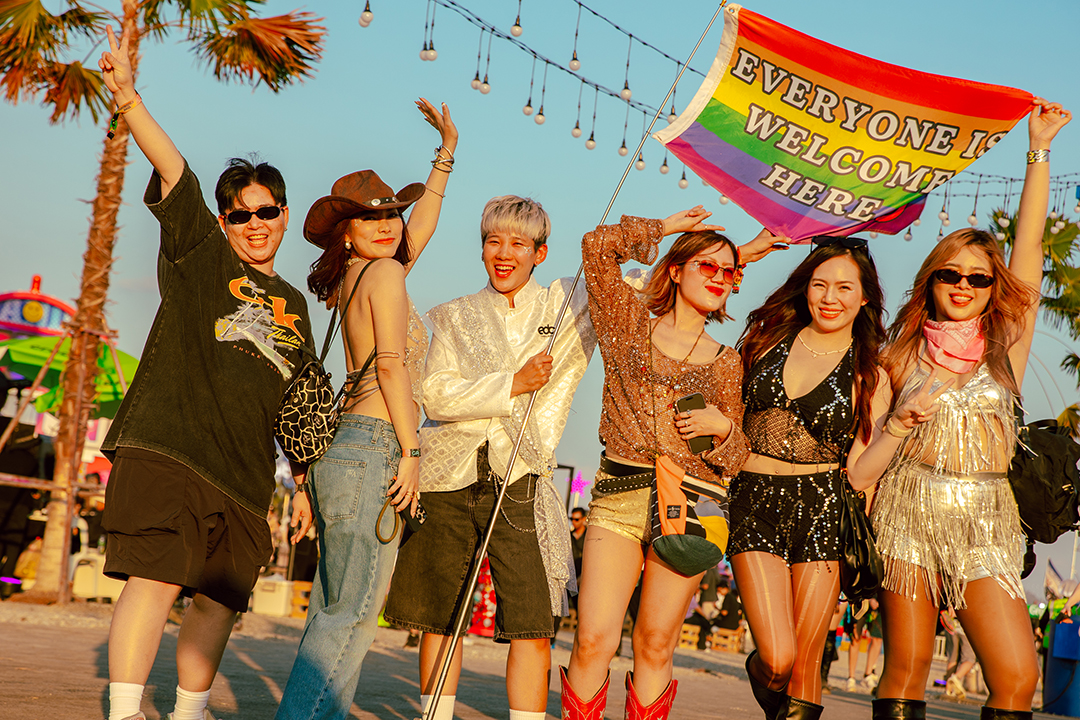
To ravers across North America, “All are welcome here” is a familiar phrase with many meanings.
Tied to the rave scene’s broader message of acceptance, the tagline adopted by continental concert giant Insomniac Events greets ravers from billboards, merch booths, and festival gates as they leave the toils of their regular lives behind.
There’s an undeniable sense of joy and relief in believing that, even if only for a few hours, it’s possible to taste a side of life free of harm, judgment, and isolation, among friends and strangers alike. Acceptance and tolerance are the founding principles on which rave culture was built. These days, the message offers hope and inspiration to a subculture trying to stay together in a world of sociopolitical upheaval.
At the same time, the idea of blanket tolerance increasingly draws criticism as more people debate whether acceptance should come with limits. Rave culture has long since evolved past the days of small gatherings, when the buddy system provided sufficient accountability to preserve PLUR (Peace, Love, Unity, and Respect). As electronic dance music events grow larger and more commercial than ever, accounts of reckless behavior like fighting, sexual harassment, theft, and vandalism make it clear that not everyone who enters the rave shares the same values. All the while, a profit-driven industry has an incentive to look the other way.
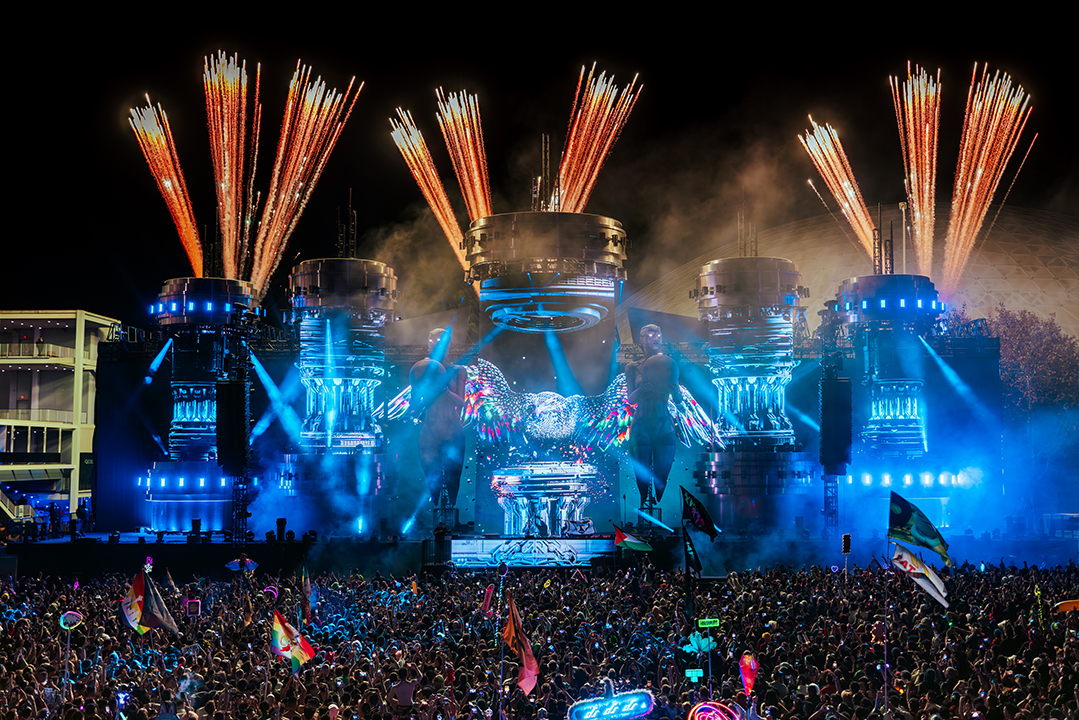
In an age when commercialism and hyper-individualism threaten to erode the empathy on which PLUR culture is built, can the rave community remain accepting of everyone while also prioritizing safety and accountability? EDM Maniac spoke with two activists in the rave community to tackle the question head-on.
“The paradox of tolerance argues that if everybody is supposed to be tolerant of everybody else, then that means we should be tolerant of other people’s intolerance, bigotry, and hate towards other people too,” Bee, an online activist and kandi art creator known on Instagram as @mood.kandi, explains. Besides sharing her creations, the Minneapolis-based raver uses her platform to educate others about social issues and ways they can take action. They believe this theory, devised by Austrian-British philosopher Karl Popper during World War II, is fueling the conflict at the heart of the rave scene’s tolerance dilemma.
Bee says this contradiction of values is the tipping point at which an “all are welcome” attitude can become hazardous, and that trying to create safe communities while accepting those who threaten them feels like being asked to fulfill two different missions that are at odds—a paradox.
They say the contradiction often boils down to misunderstanding: “It’s not actually a paradox at all. That’s just saying ‘my viewpoint is that everybody should be allowed to do whatever they want and I’m not going to police anybody,’ and that’s libertarianism, which is a totally different thing,” Bee says. “To have a society that really is tolerant of people’s differences, you cannot tolerate bigotry. That is the one intolerable thing.”
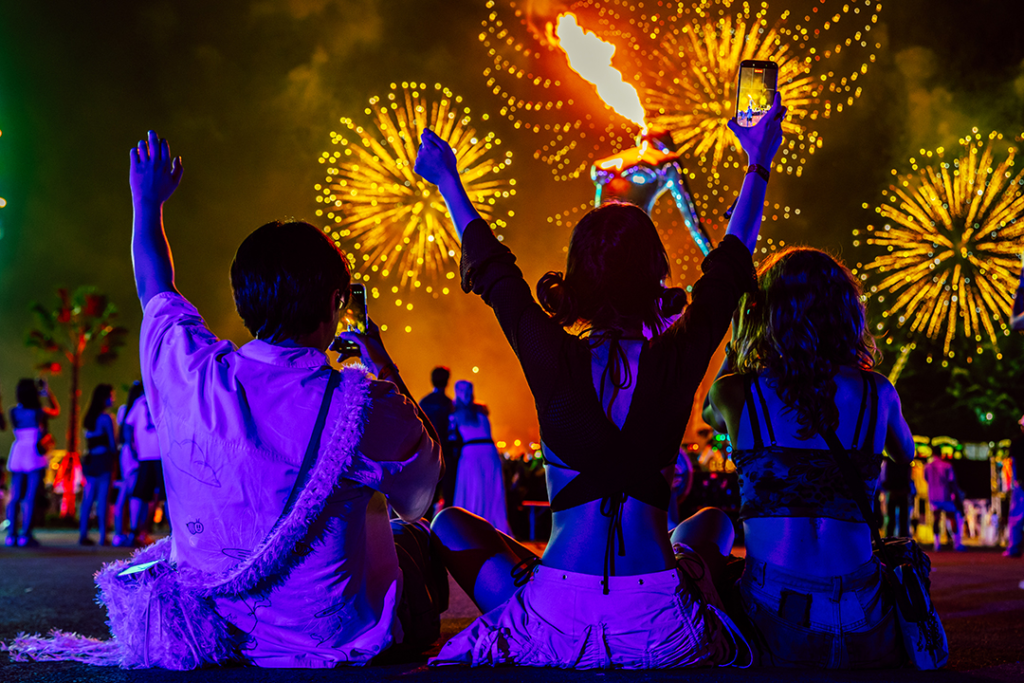
Countercultures and music communities have often strived to create spaces where different kinds of people can find acceptance that regular society does not grant them. But that goal comes with the challenge of reconciling ideal values with hard realities. Every movement must grapple with the larger systemic issues that trickle into the culture, not to mention unpredictable human behavior. In response, scenes must develop unique remedies to these issues. The electronic music scene is no exception, and the dilemma is most visible within the industry itself.
Capitalism and competition have helped electronic music evolve into a global phenomenon, but they also create conditions that shield prejudice, nepotism, and greed when profit is prioritized over safety. This carries serious consequences for fans and industry professionals alike. Oversold events put people in cramped and sometimes hazardous conditions, artists struggle to balance their health with demanding tour schedules, and women and professionals of marginalized identities continue to experience discrimination and harassment. These issues stand in direct opposition to core rave values like tolerance and respect for others, and yet persist year after year.
“There is absolutely rampant misogyny in the scene, especially in terms of people working the scene,” Bee says. “Female DJs, female promoters, women in positions of power are always coming out with stories of how they were inappropriately touched or talked over or kicked out of their own show because security didn’t believe that they were the promoter. The laundry list just goes on and on, and that should absolutely not be tolerated.”
In 2025, high-profile Belgian techno producer Amelie Lens revealed a harrowing account of stalking, in which a man sent her hundreds of threatening messages before accosting her in Antwerp. Lens later created an Instagram post lamenting the incident, which she noted is part of a larger pattern in which women in nightlife are forced to scan for threats and risk harm while predators and abusers act without consequence.
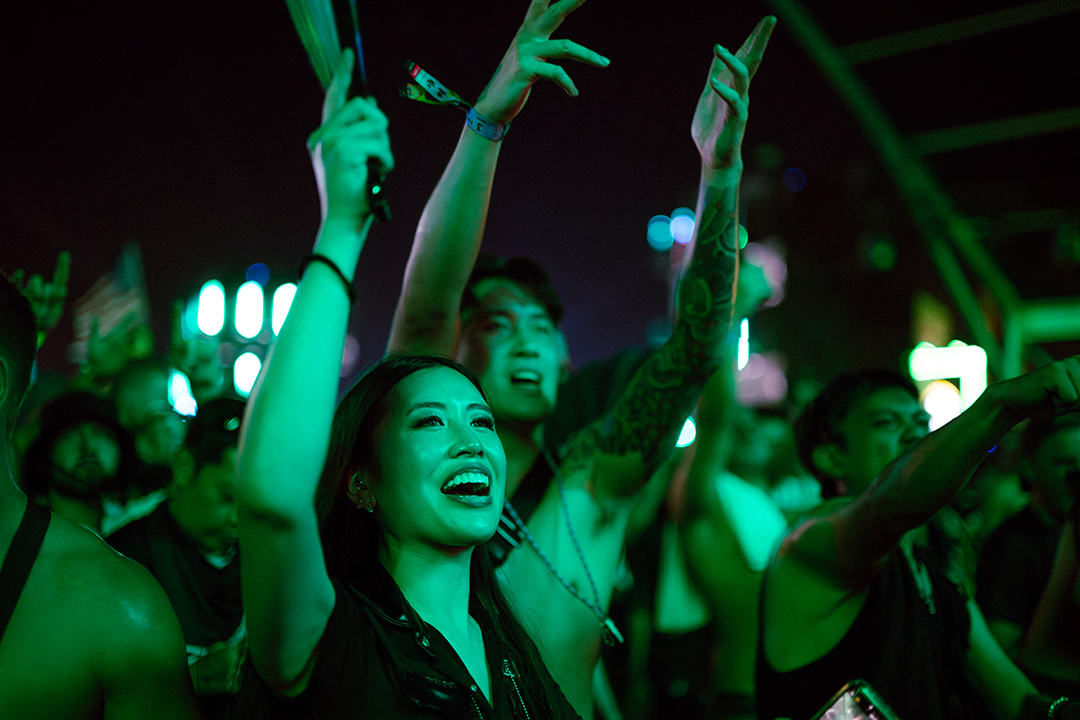
Known in the booth as Blu9, Chicago-based DJ and producer Michelle Blu echoes that frustration. In addition to her music career, Blu holds a master’s degree in occupational therapy and a PhD in pediatric behavioral medicine, and she conducts many mental health checks with DJs and other creatives. She says women and people of marginalized identities continue to face hostile environments behind the decks and on the dance floor.
“I see that the same problems I first saw as a baby DJ are still prevalent,” Blu says. “You’ll see it all the time. A powerful DJ will take a younger woman under his wing, give her opportunities, and introduce her to the right people. In exchange, there’s this implied cost, and sometimes it’s a line you’re expected to cross if you want to keep rising.”
Blu says tolerance should never cost another person their safety, and emphasizes that when facing predatory behavior like this, tolerance becomes indifference: “The reality is, when you say all are welcome without any accountability, you’re making space for people who hurt the very community that we’re trying to protect. Acceptance comes with accountability, and boy, do some people really not like it when you hold them accountable.”
Many people turn to the rave scene for refuge and reprieve from political chaos, but access to that refuge still sometimes comes at a cost. As in society, in the rave, historically marginalized groups face increasing threats as divisive ideology spreads. In response, Bee and Blu are calling for an all-hands-on-deck effort to push back against narratives that misappropriate tolerance and inclusivity as an excuse to ignore abusers and harmful behavior.
“The house and techno scenes were created by our black and queer communities. People fighting for space, for visibility, for the right to exist freely, and we’re continuing to do that now. You can’t separate this culture from its roots without erasing the very people who built it,” Bee says. “When people say they don’t want politics in dance music, what they’re really saying is ‘I don’t want to think about the parts of this culture that make me uncomfortable.’ They want the vibe without the history. They want the freedom without the fight.”
While they acknowledge that the fight for freedom is not, and has never been, easy—Bee sustains that it’s a fight well worth the effort, needed from influential actors in the scene who can step up and create change from the top down, as well as regular people who can act from the inside out. They believe it all starts with an attitude shift.
“I think that we are in kind of an empathy crisis as a nation,’” Bee says. “Over the past five to 10 years, there has been a real shift in the way we act like it’s not cool to care about things, and there are definitely people who purely profit off the scene and don’t care because they have a ‘that’s not my problem’ attitude.”
They continue: “In my view, promoters, DJs, and people with large platforms who are engaged in the rave scene and are profiting off of the rave scene have a responsibility to at least try to communicate and teach the people that they are bringing into the scene how to comport themselves. Otherwise, we lose the scene as it exists and the magic goes away for everybody.”
As an artist and industry professional, Blu shares the sentiment, but says the hard truth is that the biggest changes often must come from deep within the system itself—a place that often falls out of the average person’s reach: “Artists can start the conversation, but we can’t finish it ourselves.”
“The lasting power falls with the people behind the scenes, the talent bookers, the agents, the festival owners, the label heads, the ones who decide who gets paid, who gets to perform, and also who gets protected,” Blu says, “because we can speak out all day, but if the same bookers keep hiring the same abusers and festivals keep looking the other way, nothing changes.”
She continues: “The only way it’s going to change is when it affects the bottom line. It starts when enough people on the inside start asking a different question. That means instead of asking how much money we can make, we have to ask, ‘Who are we willing to hurt to make it?”
It’s a daunting question to close on, but not a hopeless one. Like Blu and Bee, popular festival headliners like Black Tiger Sex Machine and GRiZ also use their platforms to raise money for marginalized groupsconnect ravers, organizers, and fellow musicians with networks where they can find education and support on social issues while advocating for positive change, and are making strides toward strengthening a culture that honors tolerance while holding individuals in all roles accountable for their impact on the rave community. During his recent shows in Minneapolis, GRiZ donated 100% of merch proceeds, over $137,000, to Neighbors Helping Neighbors, a nonprofit supporting individuals targeted by ICE raids in the region.
Blu says the efforts of people in positions of power and influence can create momentum, but on the other side of the rail, it’s up to regular people to keep that momentum alive, even if it’s simply saying something when you see something.
“If you feel uncomfortable speaking up, that’s not weakness. That’s just survival kicking in, and it’s right to protect yourself,” she says. “But if you see something and you don’t know what to do, start small.”
Featured image courtesy: Insomniac Events.
