
ÄGAPĒ has been building its own corner of New York City’s techno scene since 2021.
What began as an independent party series and record label has grown into warehouse shows, international collaborations, and a community rooted in techno’s heavier sounds. This month, that evolution reached its biggest stage yet, as the first-ever ÄGAPĒ Festival took over Industry City in Brooklyn on September 5-6.
The two-night event brought together an impressive lineup of renowned techno artists, collectives, labels, and concepts shaping the genre’s current generation, handing the reins over to guest curators for a series of distinct stage takeovers. Hot Meal Records championed the playful, groove-heavy side of the scene. Face 2 Face showcased its battle-style B2B format, and 44 Front Row closed the weekend with fast, industrial pressure.
Each takeover brought its own sound, identity, and Berlin-born influence to Brooklyn, helping ÄGAPĒ continue to set the pace for the city’s underground. The brand’s first multi-day festival showed just how far that vision has grown, and how much further it can stretch.
Read EDM Maniac’s full report on ÄGAPĒ Festival 2026 below.
Quick Takes
Best moments: 44 Front Row’s closing B2B2B. Face 2 Face hosts Cloudy F2F Serafina.
Needs work: More food options. More things to explore between sets.
Hidden gem: Re-entry—being able to leave, reset, and come back was a major perk.
Audience Match
Who this festival is for: Hard techno lovers. Marathon dancers.
Maybe skip if: Techno isn’t your thing. You prefer mainstream sounds. 6AM is past your bedtime.
Vibes: A
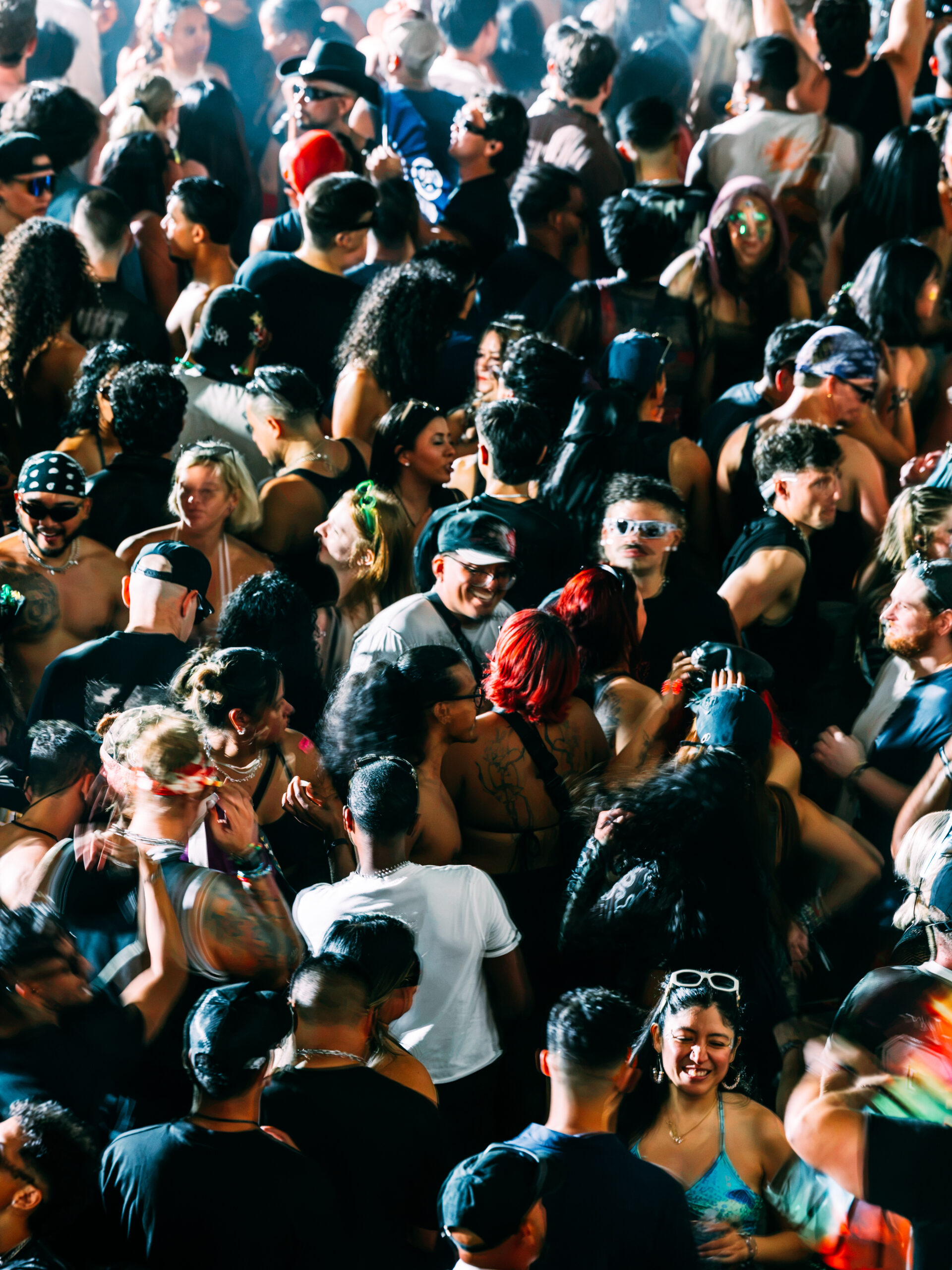
Attracted by a stacked lineup of underground techno heavyweights, ÄGAPĒ’s crowd came ready to dance.
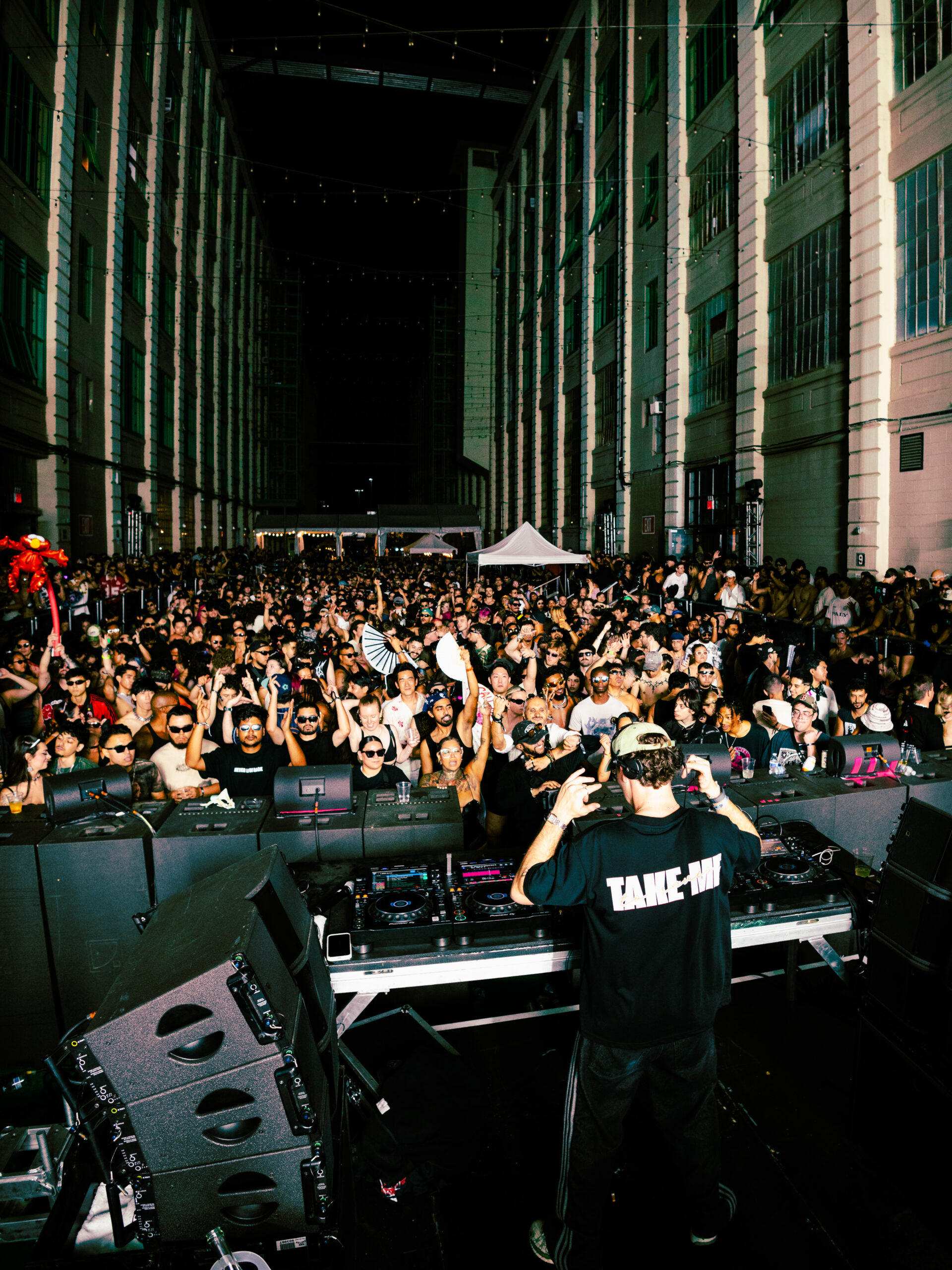
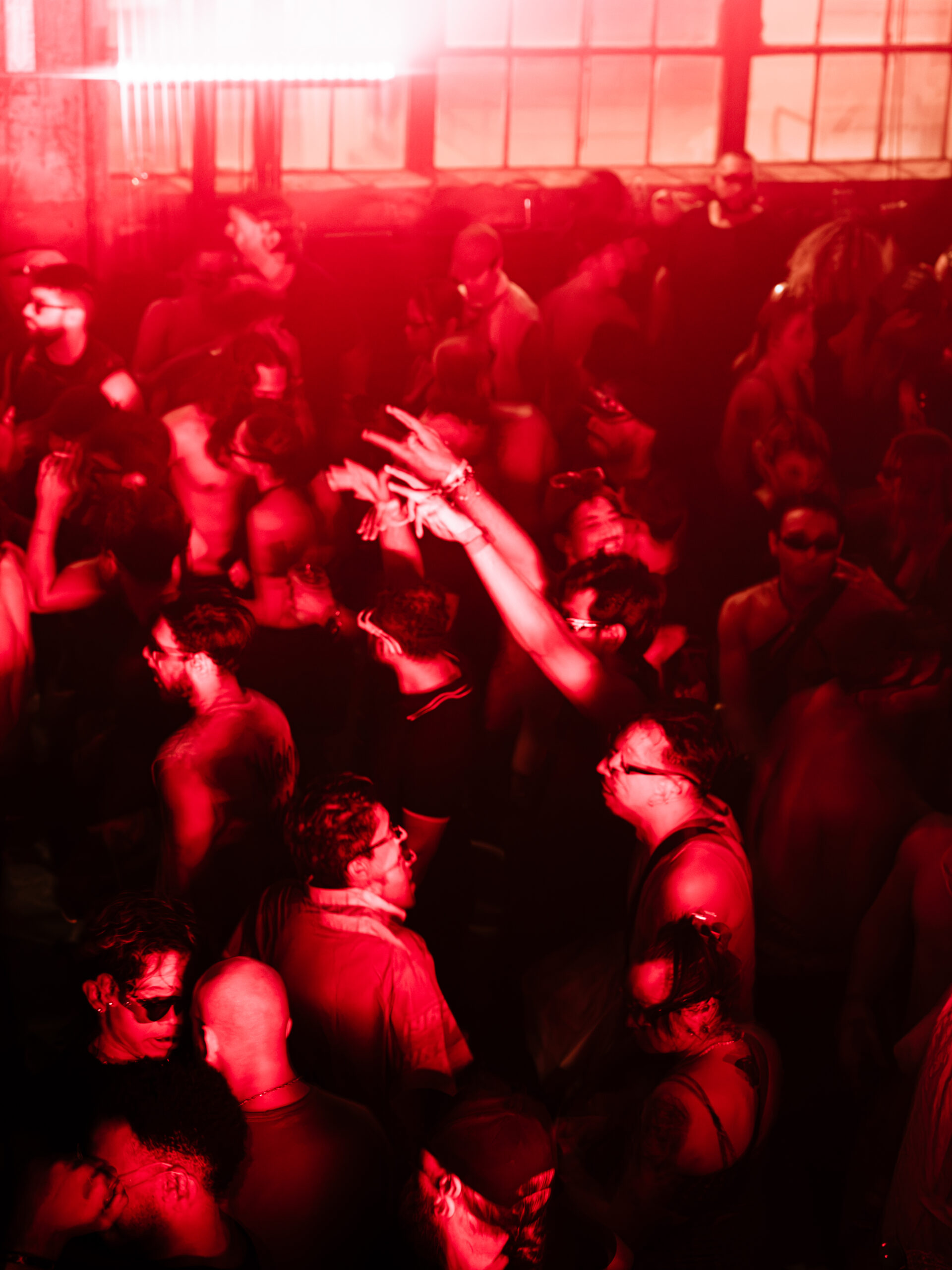
From day into night, the crowd was rarely still. Arms were in the air and bodies were moving, but even as the dance floor filled, there was plenty of room to dance freely. People naturally gave one another space, making it easy to move through the crowd without disrupting those around you.
We especially appreciated how few phones we saw on the dance floor. There wasn’t a deliberate no-phone policy, and phones certainly weren’t absent, but most came out for intentional moments before disappearing again. It’s a shared value we’ve noticed in underground techno spaces—fewer screens in the air, more people present in the music, and more opportunities to genuinely lose yourself on the dance floor.
Attendees were respectful, aware of their surroundings, and genuinely engaged with what was happening behind the decks. There was far less waiting around for recognizable tracks and much more surrendering to wherever each set went.
That energy extended beyond the dance floor and to the people working the event. Every interaction we had with ÄGAPĒ’s staff was positive. From check-in and security to food and beverage, workers were welcoming, attentive, and quick to help when needed. The environment felt well managed without being overly policed or impersonal.
Production: B+
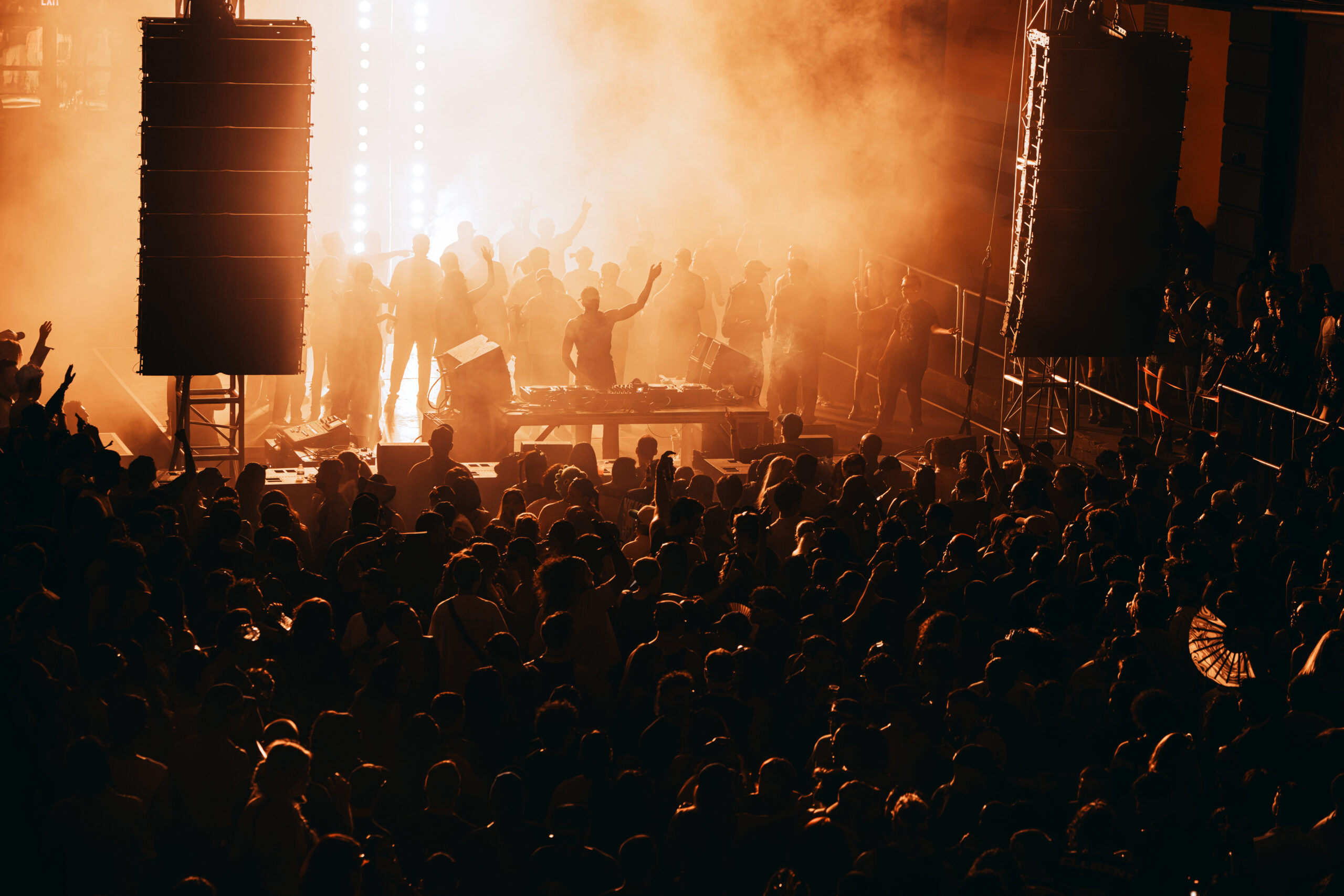
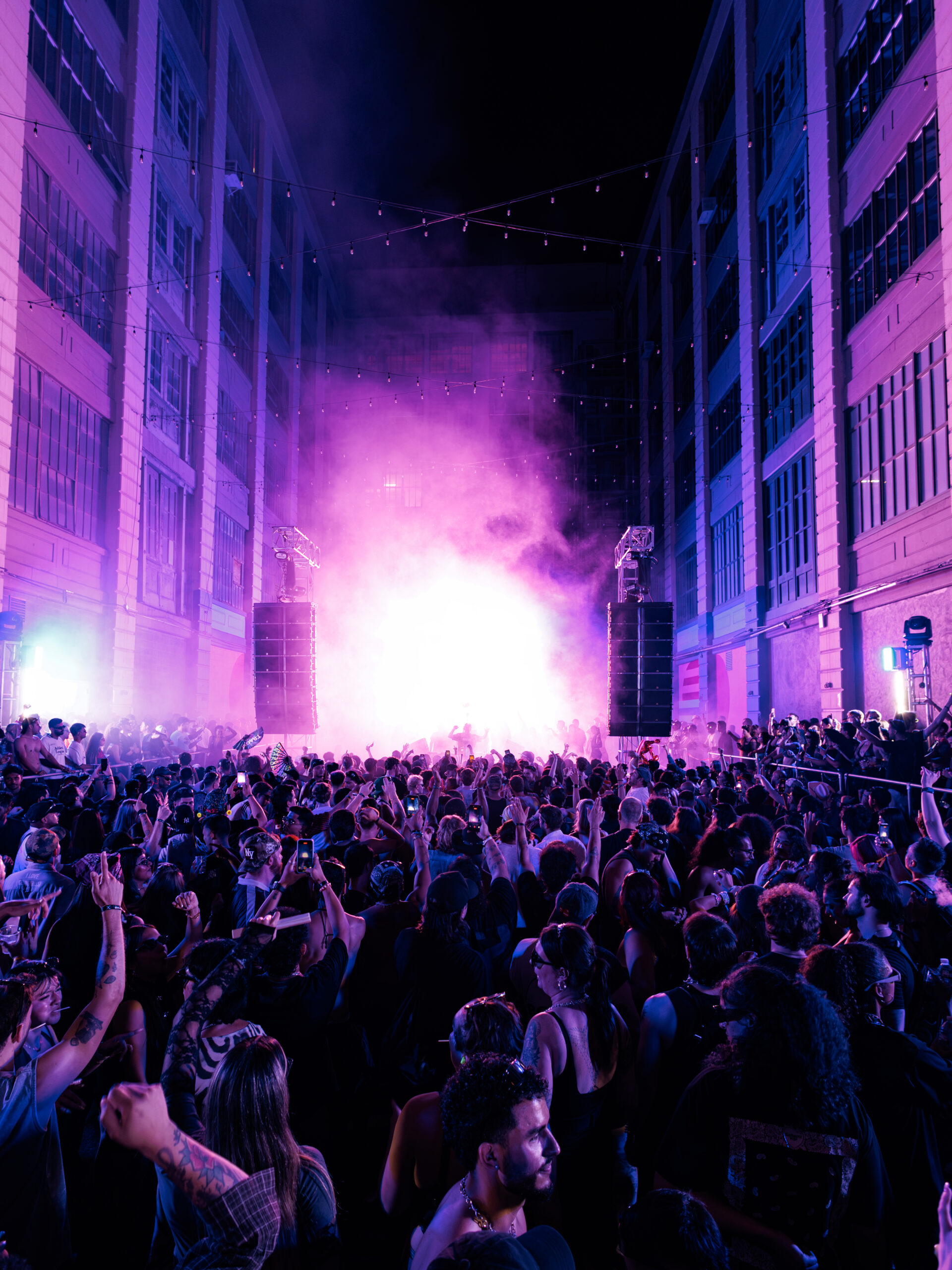
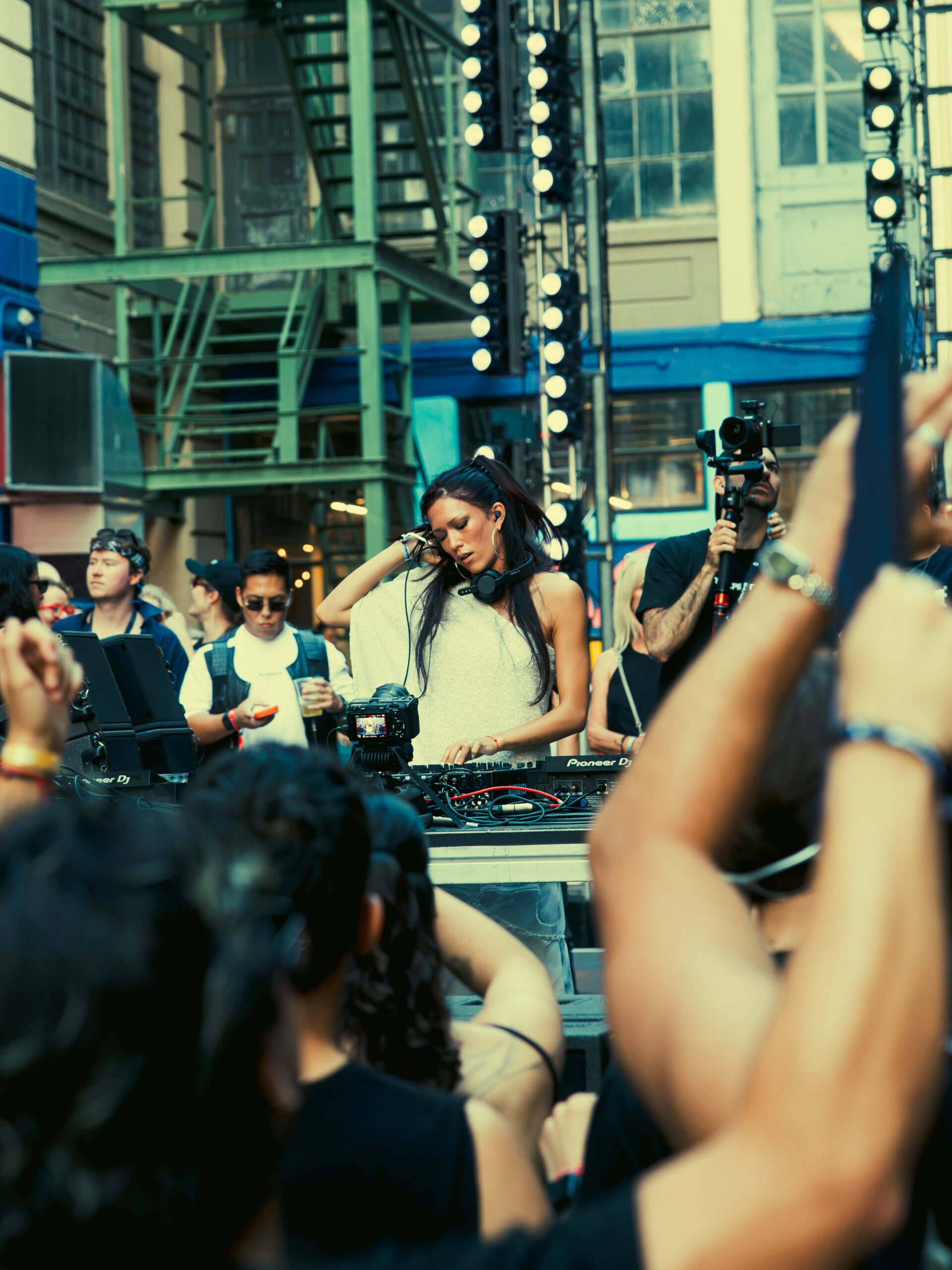
ÄGAPĒ’s outdoor stage was intentionally stripped back. Exposed trussing framed the DJ booth, while vertical LED panels and lighting fixtures filled out the structure. Set against Industry City’s industrial facade, the minimal design felt fitting for a techno festival, relying more on lighting, haze, and sound than oversized screens or elaborate stage builds.
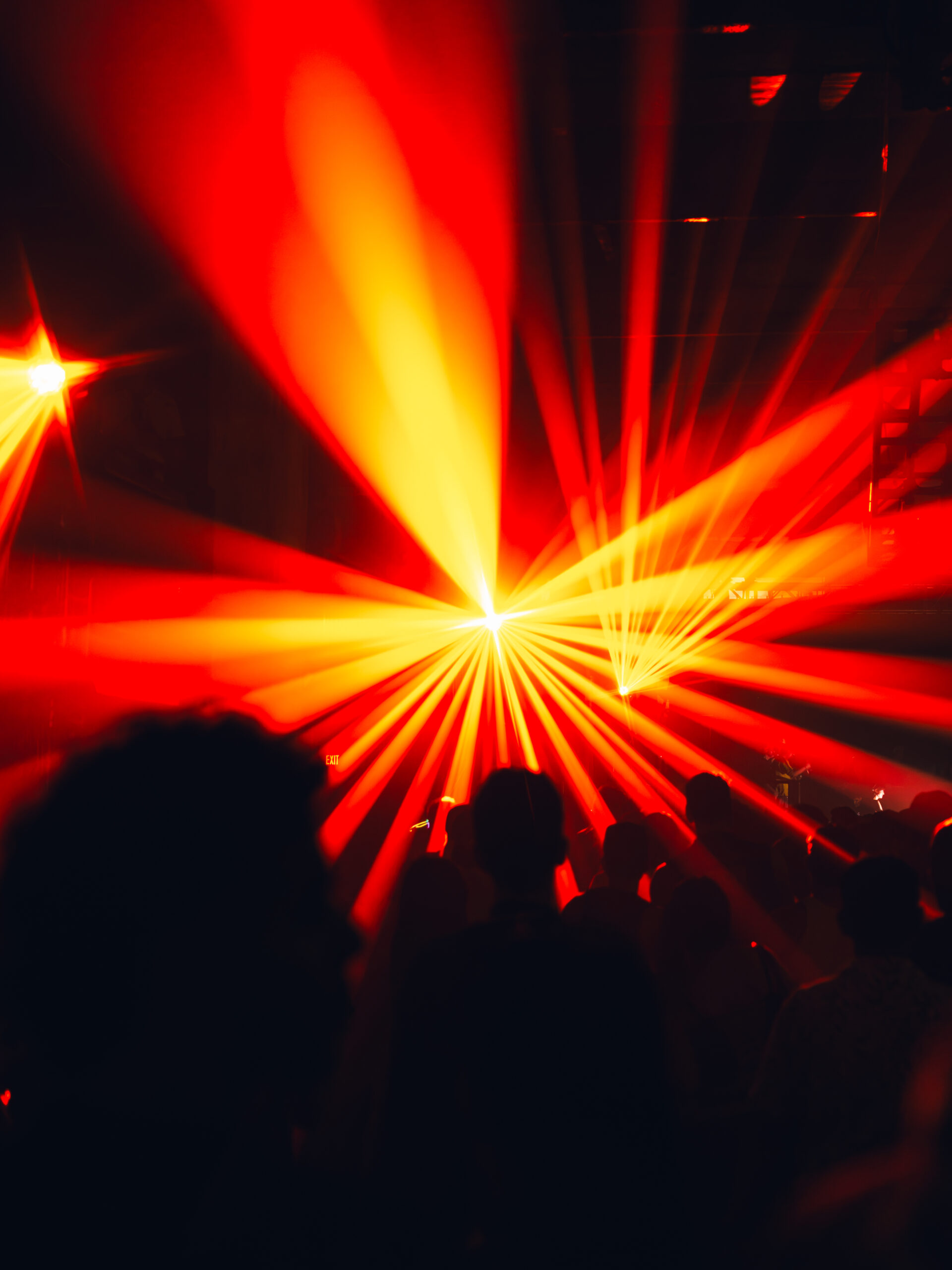
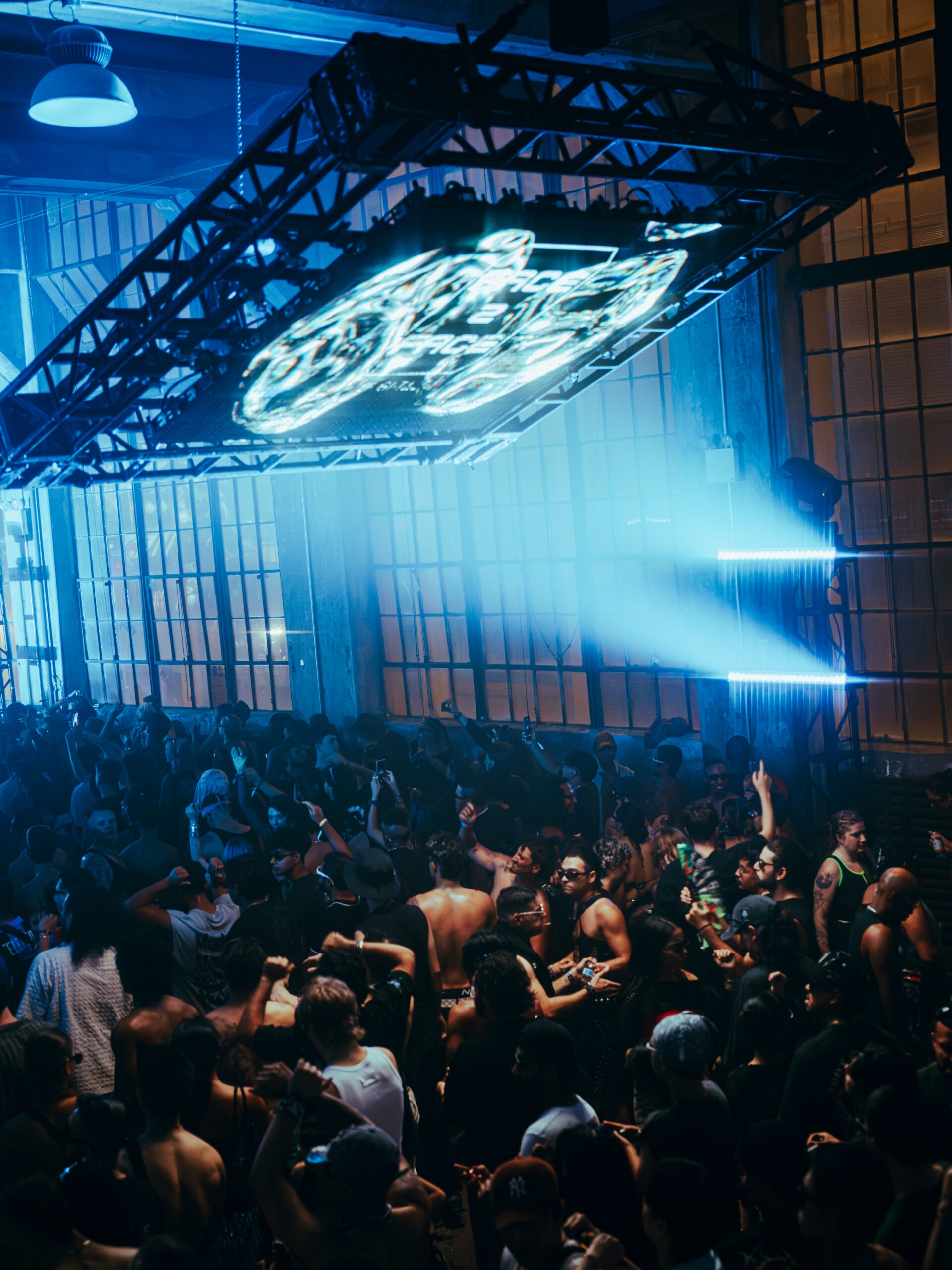
Inside, the scale of the warehouse did the heavy lifting, and a massive L-Acoustics sound system gave the room the power it needed. Beyond the stage itself, LED panels hung above the crowd while another lighting installation at the back of the warehouse lit the dance floor from behind. As lighting stretched the length of the room, the entire space became part of the visual experience rather than drawing focus to the front.
That setup worked especially well for Saturday night’s Face 2 Face takeover, as the brand positioned each artist and a set of decks directly across from each other, turning each “F2F” pairing into a back-and-forth exchange rather than a traditional B2B. Watching the DJs react to and build off of their partner’s selections added another layer to the sets, while the warehouse lighting kept the focus firmly on the artists and music.
Sound inside was one of the few areas that needed some fine-tuning on day one. The volume was noticeably lower in some parts of the warehouse than others. ÄGAPĒ acknowledged the issue on its social channels and made adjustments on day two. We could tell the difference. It was a small but important example of the organizers listening to complaints and responding in real time during its first edition.
On Sunday, 44 Front Row took control of both spaces, and the visual production matched the music’s intensity during the weekend’s heaviest stretch. A stripped-back production approach fit naturally with the raw aesthetic of the Berlin-based events brand. Dark lighting, strobes, and the industrial surroundings complemented the rising BPM of hard and fast schranz tracks. Nothing needed to compete with the music; the sound and setting did most of the work.
Music: A
For its first-ever festival, ÄGAPĒ pulled together an impressive roster featuring some of the most exciting names in techno’s fastest emerging subgenres.
Hot Meal curated the outdoor stage and eased into the weekend on day one. Ollie Lishman and Fumi carried dancers into the evening before Bad Boombox, Mischluft, and HHUNTER pushed the tempo later on. Bad Boombox was an early highlight, bringing playful energy and a groove-heavy edge that made a perfect introduction before things got heavier.
At 8PM, the indoor warehouse opened for a marathon of programming from Face 2 Face. Ramsey Neville F2F Michelle Kay, and Junkfile F2F Diossa kicked things off before EMILIJA F2F BIIANCO, Cloudy F2F Serafina, Adrián Mills F2F WILDERÍCH, Fenrick F2F Supergloss, and Flashgea F2F Conrad Taylor carried the room straight through to 6AM. Individual styles collided as DJs one-upped their partners across the decks.
Sunday belonged to 44 Front Row. Dalton Taylor opened the outdoor stage before Marco Neves B2B Jay York, Volvox, Future.666, and David Löhlein carried things through the afternoon. In a fitting pairing, Aiden B2B Kobosil was our standout of the day, as their hard, heavy industrial beats kept us planted at the outdoor stage. TRIPTYKH B2B O.B.I. followed to close out ÄGAPĒ’s final stretch in the daylight. From there, the weekend moved inside.
KAYA and Ueberrest set the warehouse in motion before Kobosil, Clara Cuvé, and Somewhen commanded the dance floor late at night. Somewhen had us especially hooked, mixing nostalgic tunes with lyrical moments that had us caught in our feels while dancing at full force.
At 4AM, Kobosil, Somewhen, and Ueberrest came together for 44 Front Row’s closing B2B2B. Two days in, we should have been running on empty, but the warehouse had other plans. The dance floor stayed alive through ÄGAPĒ’s final hours, giving us one last reason to keep moving until sunrise.
Venue: A
Built in the 1890s, Industry City has been a cornerstone of Brooklyn’s working identity for more than a century. The venue’s warehouses, factories, and surrounding waterfront shape this part of the borough for the better. For ÄGAPĒ, that history became the setting for Industry’s first fully techno-focused event of this scale, welcoming roughly 5,000 attendees.
The venue couldn’t have felt more fitting. Outside, the open-air courtyard was surrounded by Industry City’s towering warehouse buildings, creating a daytime party atmosphere from afternoon to sunset. Once the indoor stage opened, stepping into the warehouse felt like entering an entirely different side of the festival.
The high ceilings and room length gave the crowd space to move, while permanent indoor bathrooms were a major upgrade from the porta-potties we’ve come to expect at most festivals. Water refill stations and fountains were available, making it easy to stay hydrated without constantly buying bottled water.
Organizers clearly thought about keeping people comfortable. Mobile air-conditioning units positioned outside funneled cool air into the VIP lounge and indoor stage area, offering much-needed relief after hours on the dance floor.
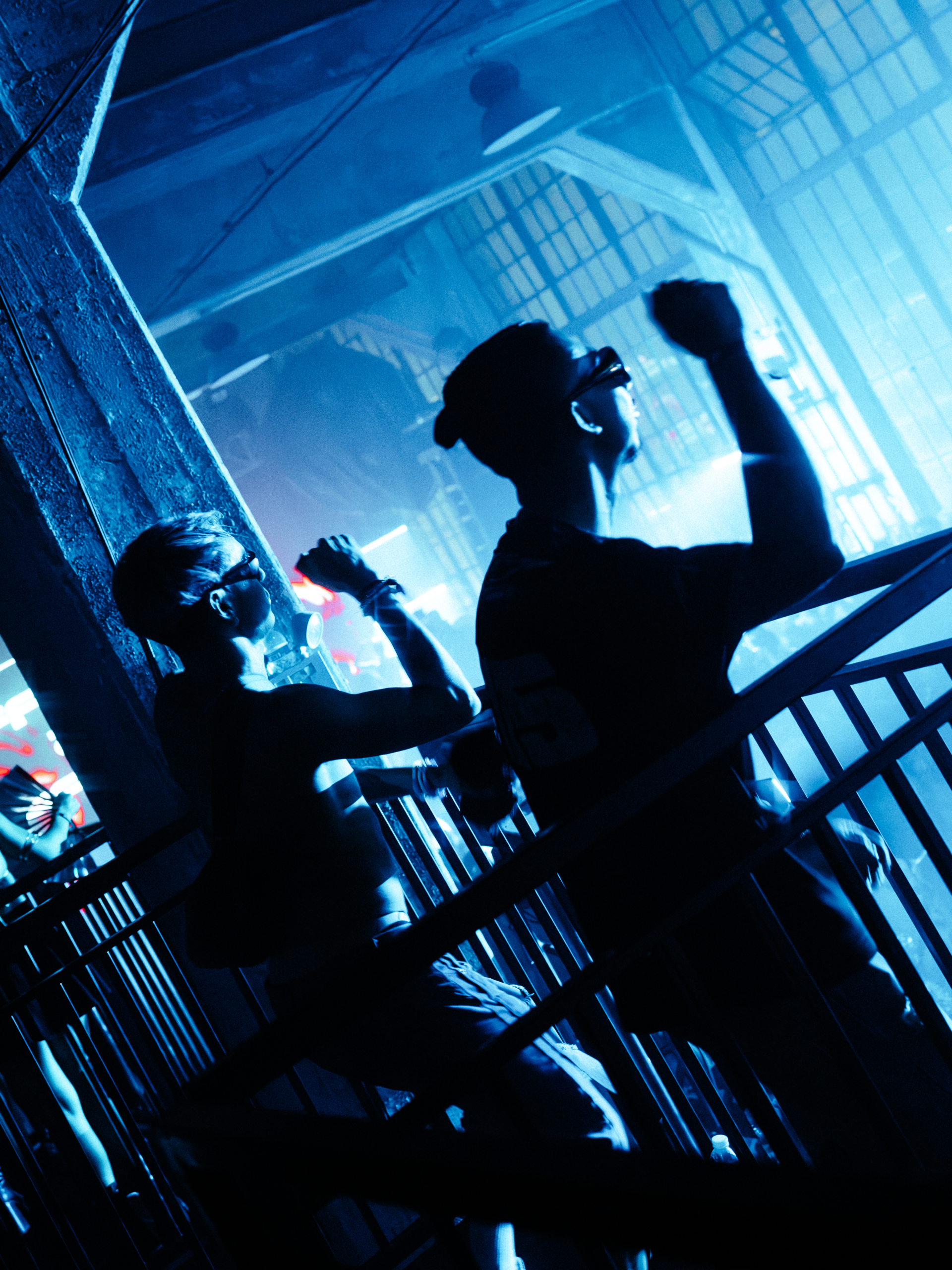
The venue’s tiered viewing options were another highlight. Backstage access featured a two-level platform overlooking the action, while VIP had its own elevated viewing platform to the right of the stage, offering another vantage point above the crowd.
Lockers were available for $16 per day, with the option to reserve ahead of time or for the full weekend. But one of the best perks was re-entry. With programming stretching until 6AM, being able to leave Industry City and return gave us considerably more freedom to pace ourselves throughout the two-day marathon.
Despite the number of attendees coming through each day, the festival rarely felt difficult to navigate. With only two stages, there were no long walks or complicated routes between sets, and moving from the outdoor courtyard to the warehouse took only a few minutes.
That proximity also underscored the contrast between the two spaces. Though the dance floors were only steps apart, one minute we were dancing outside beneath Industry City’s towering buildings, and the next we were stepping into a dark warehouse that felt worlds away.
For a first-year festival, ÄGAPĒ found a venue that felt remarkably true to its identity—a piece of Brooklyn’s industrial past transformed into a home for the city’s next chapter of techno.
Sidequest-ability: B
ÄGAPĒ wasn’t a sidequest festival. It was a dance-until-you-can’t-move kind of festival, and we weren’t expecting it to be anything else.
When it was time to step away from the speakers, outdoor chill areas, dedicated VIP spaces, and food and beverage vendors gave attendees an opportunity to unwind. The weekend’s rhythm was simple: refuel, hydrate, stretch, catch your breath, and get back to the dance floor. For an event focused on the music, we were satisfied with that.
Re-entry opened up more possibilities for sidequests outside of the venue. Attendees could leave Industry City and return later, meaning exploration didn’t have to stop at the festival gates.
There is still room for improvement in this category as ÄGAPĒ grows. A photo booth, another food option or two, or even a small art installation, gallery, or vendor area could give people something to discover while resting between sets, without taking away from the music-first nature of the event. But with the dance floor at the heart of the experience, little else was needed to hold our attention.
Food & Beverage: B
Food and beverage at ÄGAPĒ served its purpose: to refuel ravers so they could get back to dancing.
Three food vendors set up outside, offering a decent variety of menu items for a festival of this size: seafood options, Latin American eats, and easy-to-eat festival snacks, like grilled cheese on a stick. Most substantial options cost between $15 and $25. Our sleeper hit of the weekend was the $5 gluten-free empanadas, and apparently, everyone else got the memo too. They were among the most affordable options at the festival and sold out on day two.
Bar options were equally straightforward. Shots started at $15, Orion beer cost $11, Surfside Iced Tea cost $16, and canned Super Lyte cost $17. Pricier pours reached $20, putting alcohol expenses in line with what we’ve come to expect at major events in a city such as New York.
More importantly, for a weekend spent dancing for hours on end, water refill stations and fountains were available throughout the festival, so staying hydrated didn’t require buying bottled water.
We could have used another food vendor or two, particularly with such long programming each day, but what was available covered the essentials.
Overall: A
For an inaugural festival, ÄGAPĒ arrived with a remarkably clear sense of identity.
Rather than stretching itself thin, the festival concentrated on what mattered: sharp curation, two distinct dance floors, strong sound, and an industrial venue that felt inseparable from the music happening inside it. At roughly 5,000 attendees, there was enough scale to create the massive, high-energy moments techno thrives on without sacrificing room to dance or ease of movement.
ÄGAPĒ still has room to grow. More food options, art, vendors, or a handful of thoughtful activations could add another layer between the beats, but those feel more like opportunities for future editions than anything missing from the first.
What stayed with us most was how complete the weekend already felt. ÄGAPĒ took the community and identity it has spent years building in Brooklyn and gave it room to grow into something bigger, without losing what made it feel underground in the first place.
And we won’t have to wait long to see where it goes next: ÄGAPĒ Festival returns February 19-20 for its winter edition, and after dancing our way through the first one, we’re already curious to see what chapter two brings.
Find EDM Maniac’s complete Festival Report Card archive here.
Featured image courtesy: ÄGAPĒ Festival. Credit: @emilyguzz.
