
Few festivals in the world have built a universe around electronic music like Tomorrowland.
Since its debut in 2005, the Belgian festival has grown into one of the most recognizable names in global festival culture, drawing hundreds of thousands of people from more than 200 countries to De Schorre Park in Boom each summer. This year’s first weekend, held from July 17-19, brought close to 200,000 people to the site.
Over the years, Tomorrowland has become synonymous with enormous stages, theatrical production, art installations, fireworks, and fantasy-inspired environments so detailed that walking through the grounds feels like stepping into another world. Last month, that world reopened to a new chapter.
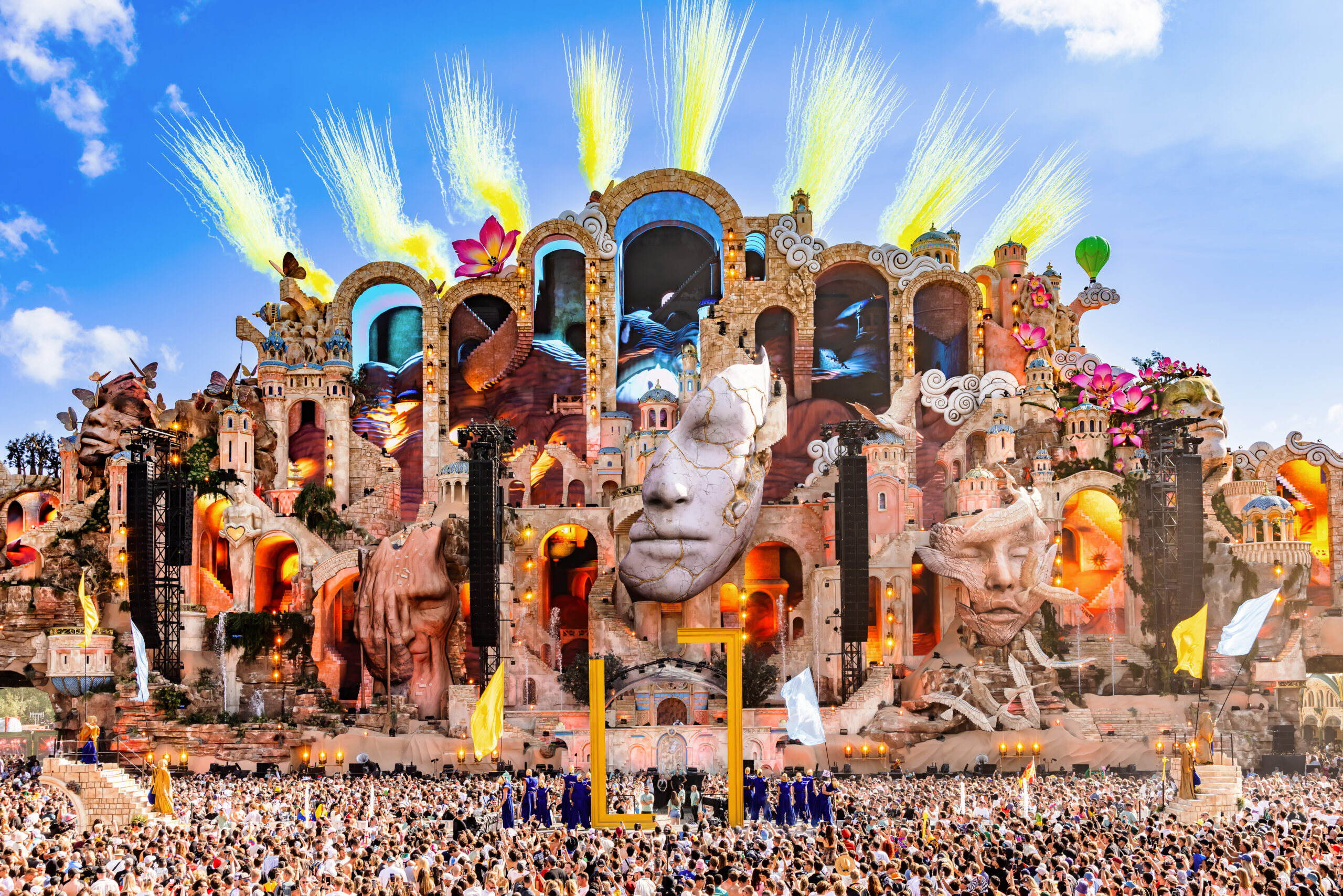
After a fire destroyed Tomorrowland’s Orbyz MainStage two days before the festival’s 2025 edition was set to begin, organizers rebuilt the festival’s centerpiece in time for opening weekend, but in a stark departure from the elaborate structures Tomorrowland is known for. Twelve months later, this year’s new festival theme, “Consciencia,” and its ornate MainStage felt like a true return to form.
With its hallmark build towering over De Schorre once more, the sights and sounds of Tomorrowland shone even more brightly, moving freely between house, progressive, techno, trance, hard dance, and bass, with debuts, major moments, and everything in between.
By the end of weekend one, we couldn’t shake the feeling that there really is nothing else quite like Tomorrowland. Read EDM Maniac’s full report on the first weekend of Tomorrowland Belgium 2026 below.
Quick Takes
Best moments: Calvin Harris’ mainstage debut. Subtronics closing out Planaxis. Face 2 Face takeover at the Cage.
Needs work: The Cage queue.
Hidden gem: The Moose Bar.
Audience Match
Who this festival is for: Curious partygoers. Committed ravers. Genre-fluid festivalgoers.
Maybe skip if: Long walks aren’t your thing. You prefer intimate dance floor vibes. You’re loyal to one sound.
Vibes: A+
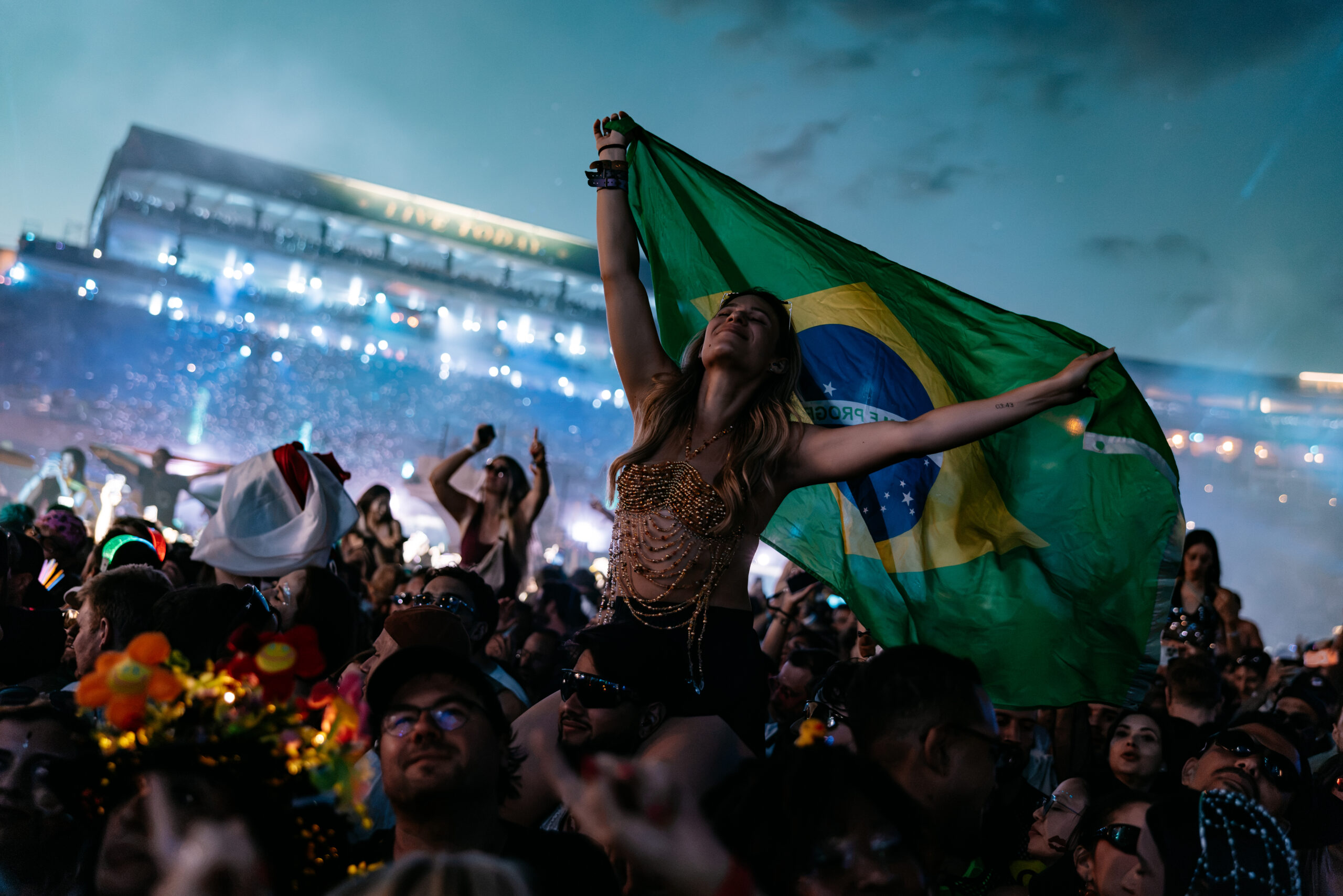
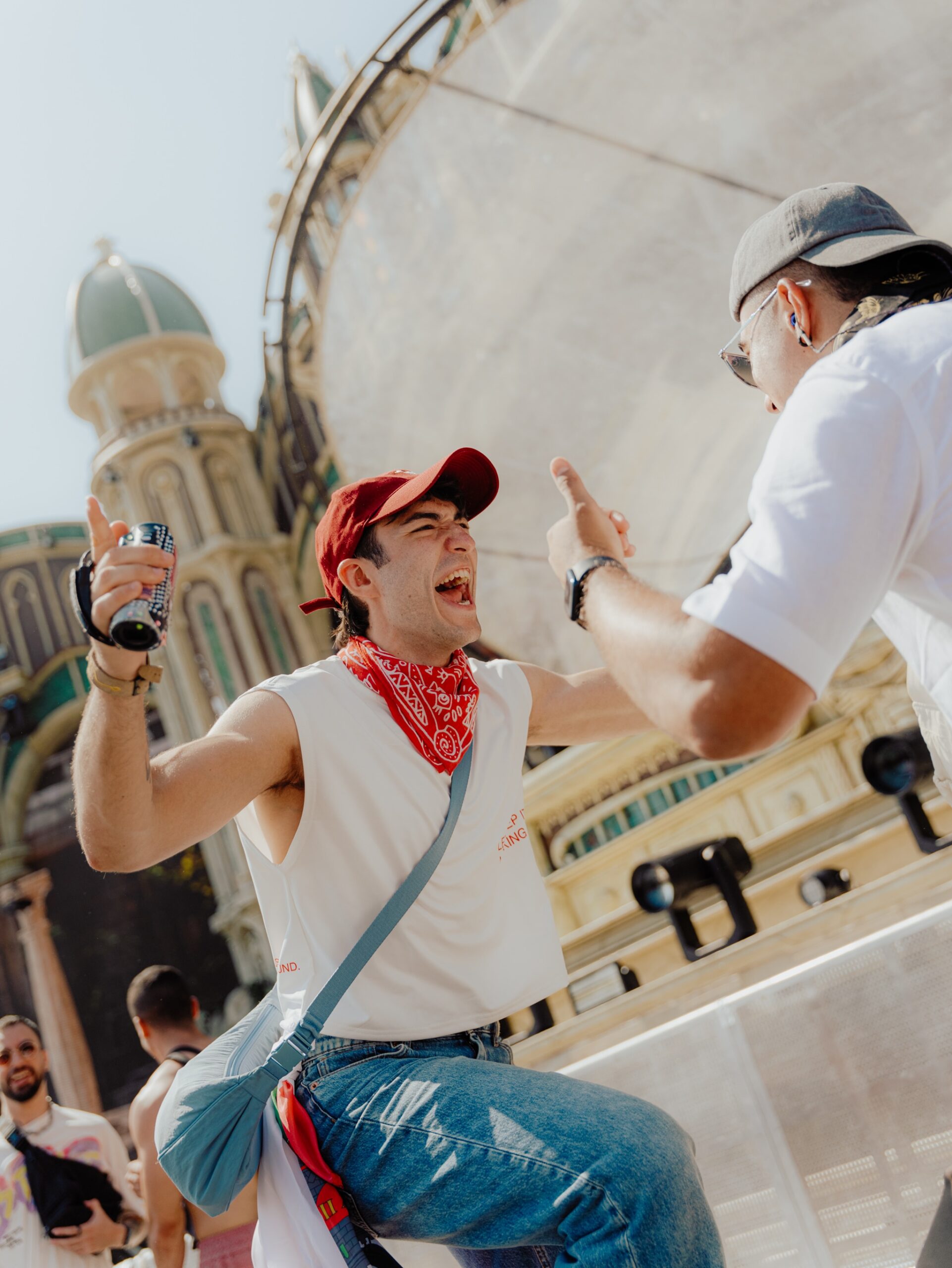
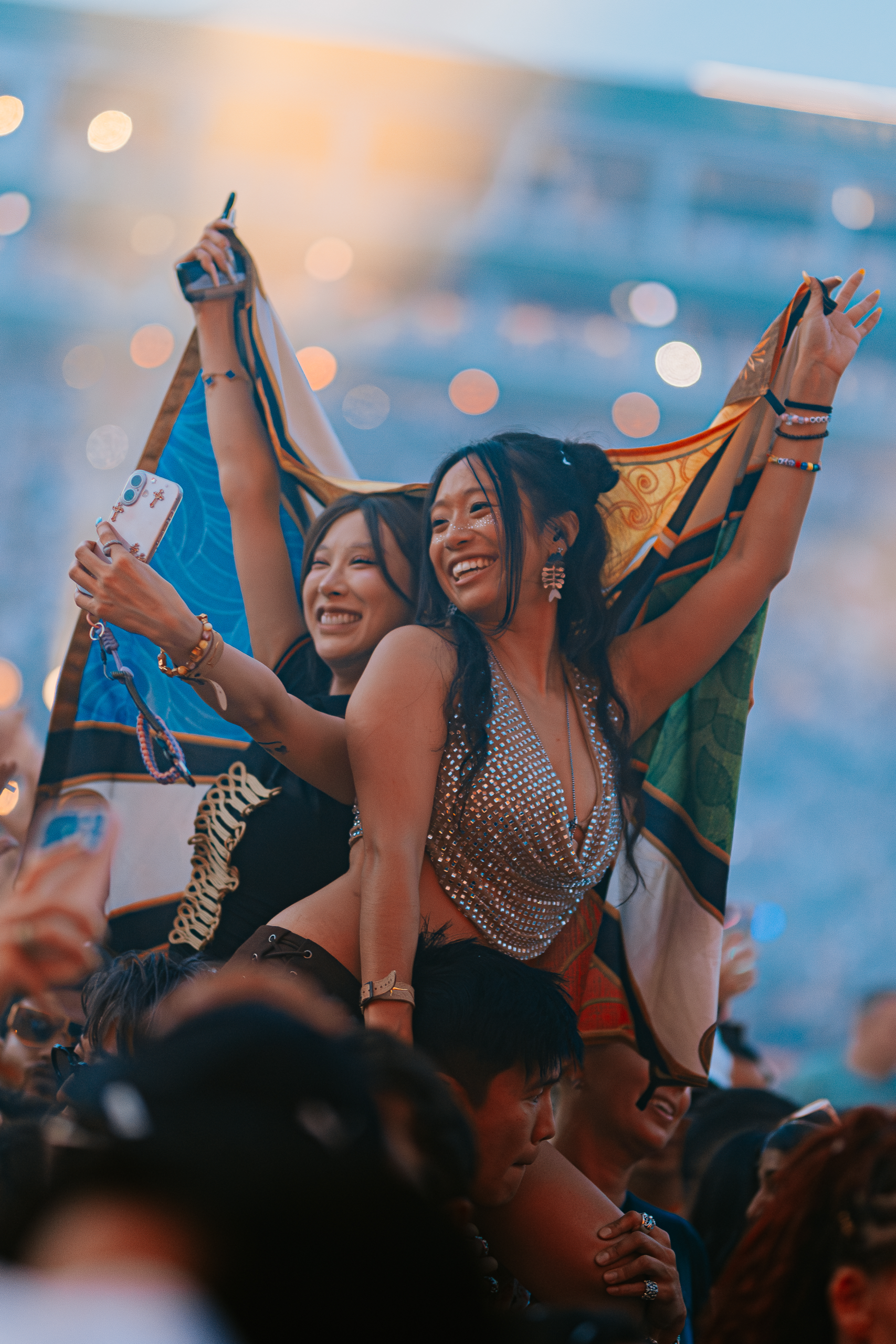
After attending dozens of festivals, we’ve struggled to recall another crowd that felt as genuinely happy and kind as Tomorrowland’s. Across the festival grounds, people were simply happy to be there. Strangers interacted, danced together, made conversation, shared space, or simply exchanged smiles. Despite the festival’s enormous international community, the crowd never felt divided by where people came from, how old they were, or what they were wearing.
The age range was especially striking. Alongside young ravers were plenty of older attendees. We met two Belgian women in their late 60s who were attending their first Tomorrowland and spoke excitedly about finally checking the festival off their bucket list, eager to share how much they were enjoying the crowd around them. Tomorrowland isn’t just for young people, and participation doesn’t require a certain look or level of rave experience.
There was no dress code. Everyday athleisure stood alongside traditional festival fits, sequins, glitter, elaborate costumes, fantasy characters, jerseys, tiny rave sets, and outfits that pushed creativity in every direction. People had permission to become whoever they felt like being for the weekend.
That same freedom poured onto the dance floor. The MainStage swelled into a living mass during the biggest performances, but the crowd always gestured with generosity. Dancers made space, pulled new friends into their circles, swayed in close company, and surrendered to the music as one: thousands of voices chorusing together, bodies moving in unison beneath the lights.
The mood was never static. Energy shifted in tune with the music—euphoric, hypnotic, heavy, tender, or completely unhinged depending on what was coming through the speakers. Each pocket of the festival developed its own distinct vibe, linked by the happiness that ran through it all.
Tomorrowland also makes the scale of the global dance music community impossible to ignore. Flags from seemingly every corner of the world appeared throughout the grounds, and the crowd’s diversity was a defining part of the experience. People arrived representing their home countries, but once inside, everyone shared the same larger identity: the People of Tomorrow. Though it might sound far-fetched, if you make the pilgrimage to Boom, the festival’s slogan becomes something real you can actually feel around you.
PLUR may not be the language typically used to describe European festival culture, but the behavior at Tomorrowland was definitely aligned with its principles. Respect, openness, friendliness, and a willingness to share the experience with strangers were present throughout the weekend. We didn’t experience any problems with aggressive behavior or heavily intoxicated attendees, and the atmosphere remained remarkably positive even as the site filled with hundreds of thousands of ravers.
For a festival this big, the crowd felt remarkably unified. We were reminded how small the world can feel when people choose to meet each other with kindness. By that measure, Tomorrowland is not simply an example of a great festival crowd. It is also a compelling example of what a global festival community can look like when everyone arrives ready to share the same space.
Production A-
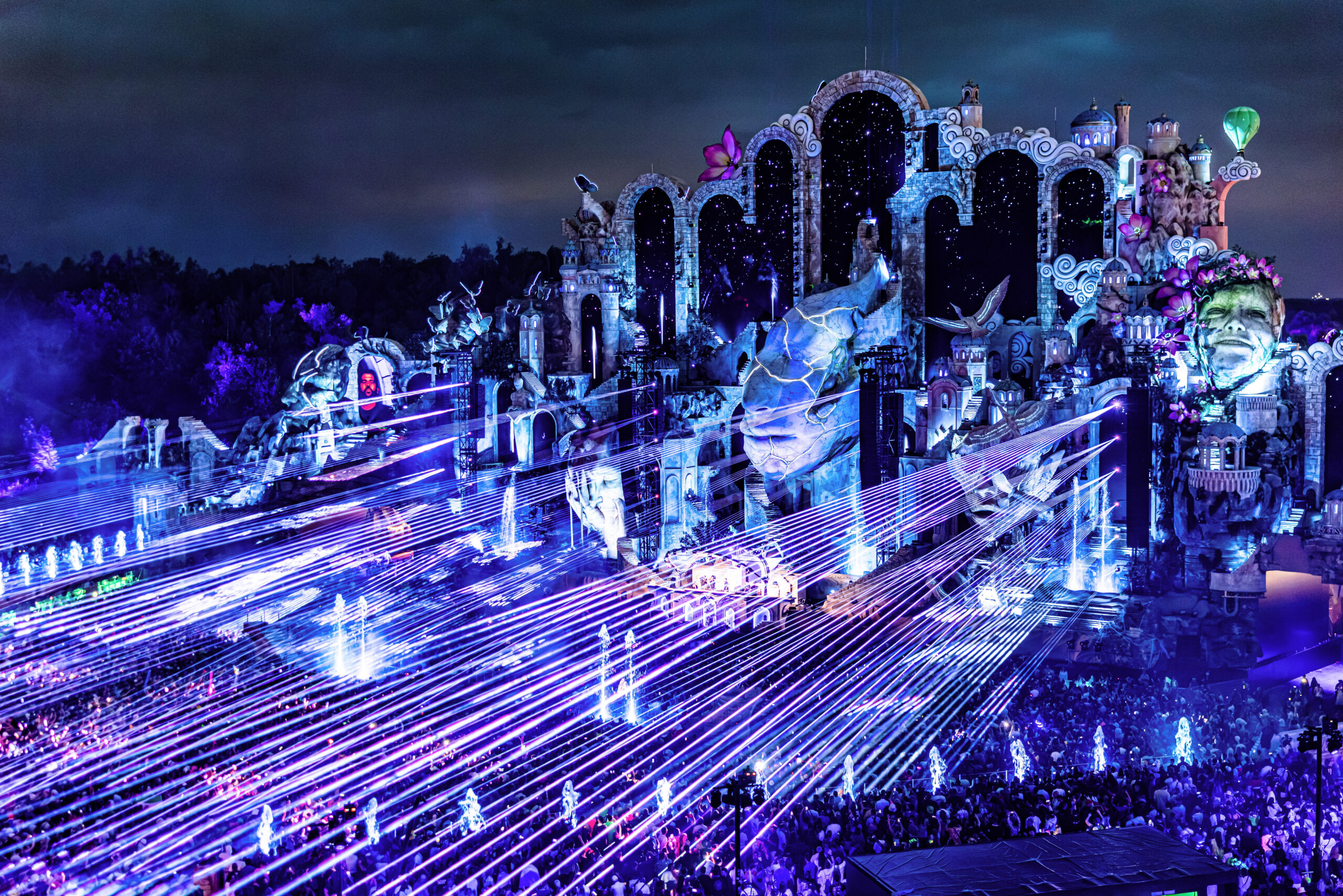
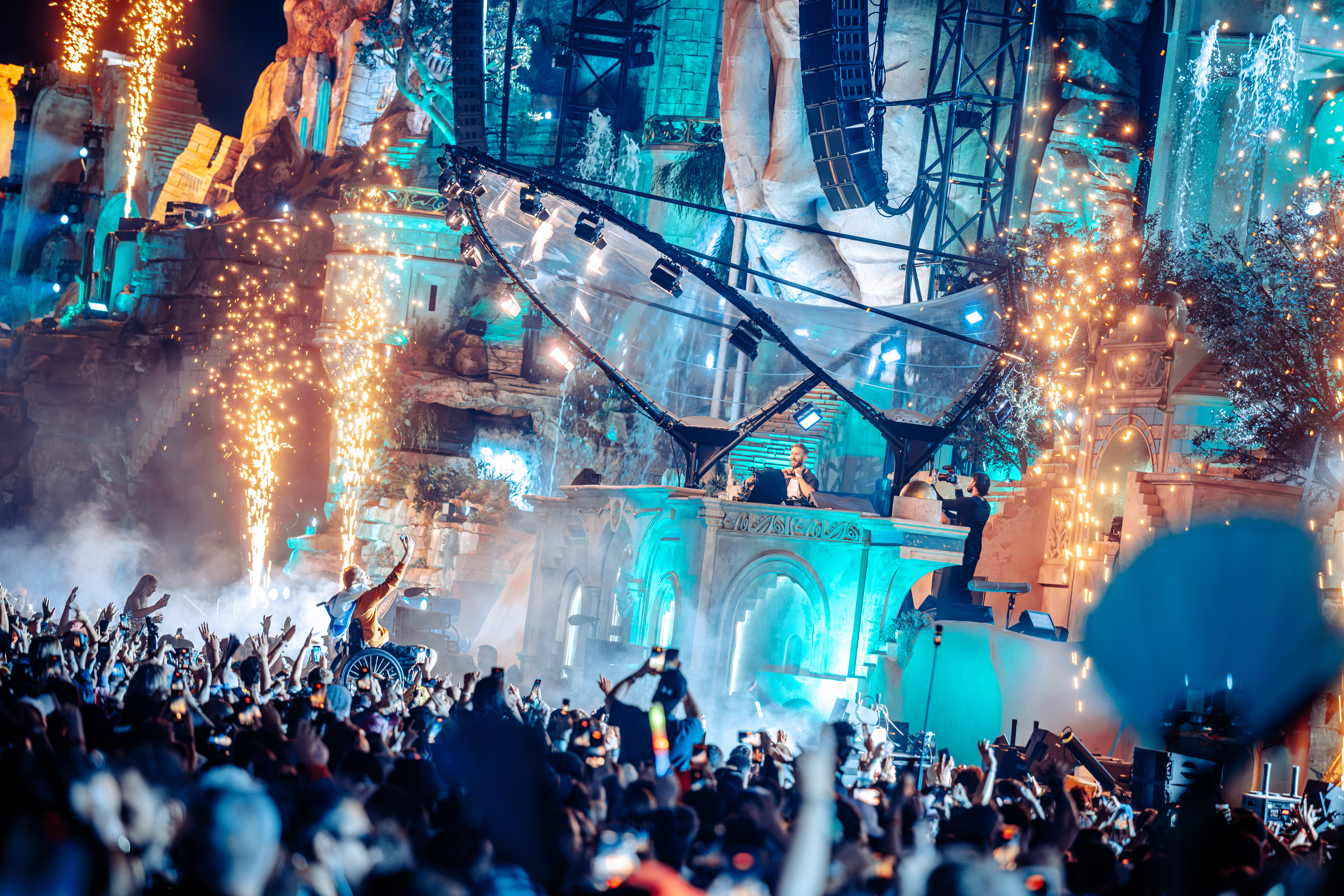
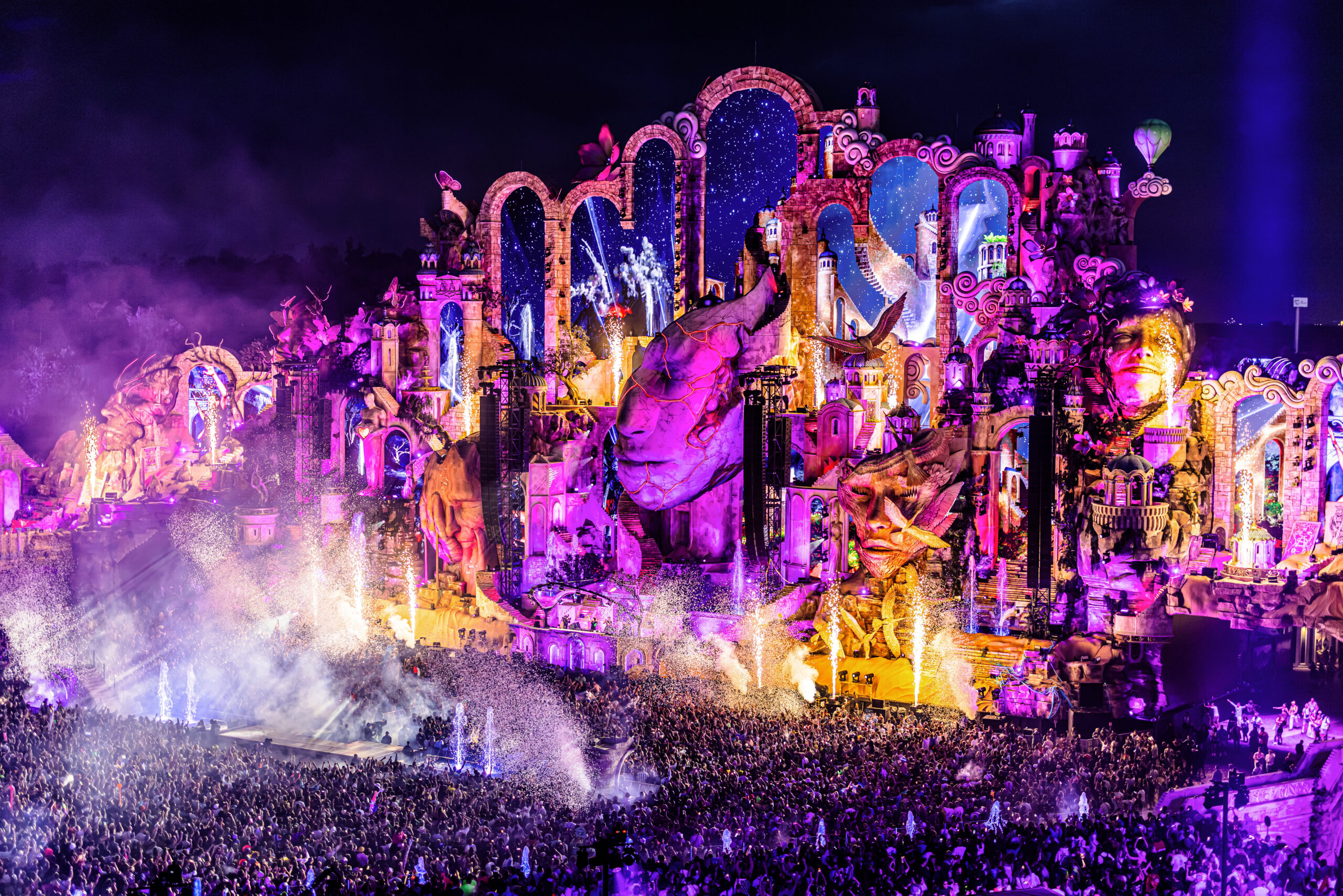
Tomorrowland’s reputation for massive production is well earned. This year’s Consciencia MainStage stood over 140 feet tall and stretched over 450 feet wide, featuring six monumental faces representing emotions of wonder, love, anger, desire, joy, and sadness. The scale was extraordinary, but the details were what made the structure worth studying up close.
In daylight, the MainStage’s muted colors let its architecture and more intricate elements stand out. Longtime Tomorrowland fans could recognize references to previous chapters of the festival’s story: a man holding a heart to his chest, a nod to 2022’s Reflection of Love theme; playing cards referencing 2017’s Amicorum Spectaculum; a flying balloon from 2023’s Adscendo; and a flower from 2024’s LIFE.
When the sun went down and darkness settled over De Shorre, the stage took on an entirely different character as lighting revealed new layers of the design and changed the appearance of the faces.
The production also gave Consciencia a narrative purpose. Throughout the weekend, the performers and staging carried audiences through the six emotions at the heart of the story. Each emotion had its own visual and musical character, and we felt our own feelings shift with them.
Tomorrowland’s MainStage comeback did come with one significant concession on weekend one. Local authorities prohibited fireworks and some pyrotechnics due to elevated fire risk after a period of extreme heat and dry conditions. But once again, Tomorrowland adapted, using programmed LED effects to create the illusion of fireworks, backed by lasers, fountains, waterfalls, massive screens, and an enormous lighting system. While the absence of real fireworks was noticeable, it hardly defined the production experience. Fifty-six lasers, 38 fountains, two waterfalls, and a massive LED canvas did plenty of heavy lifting.
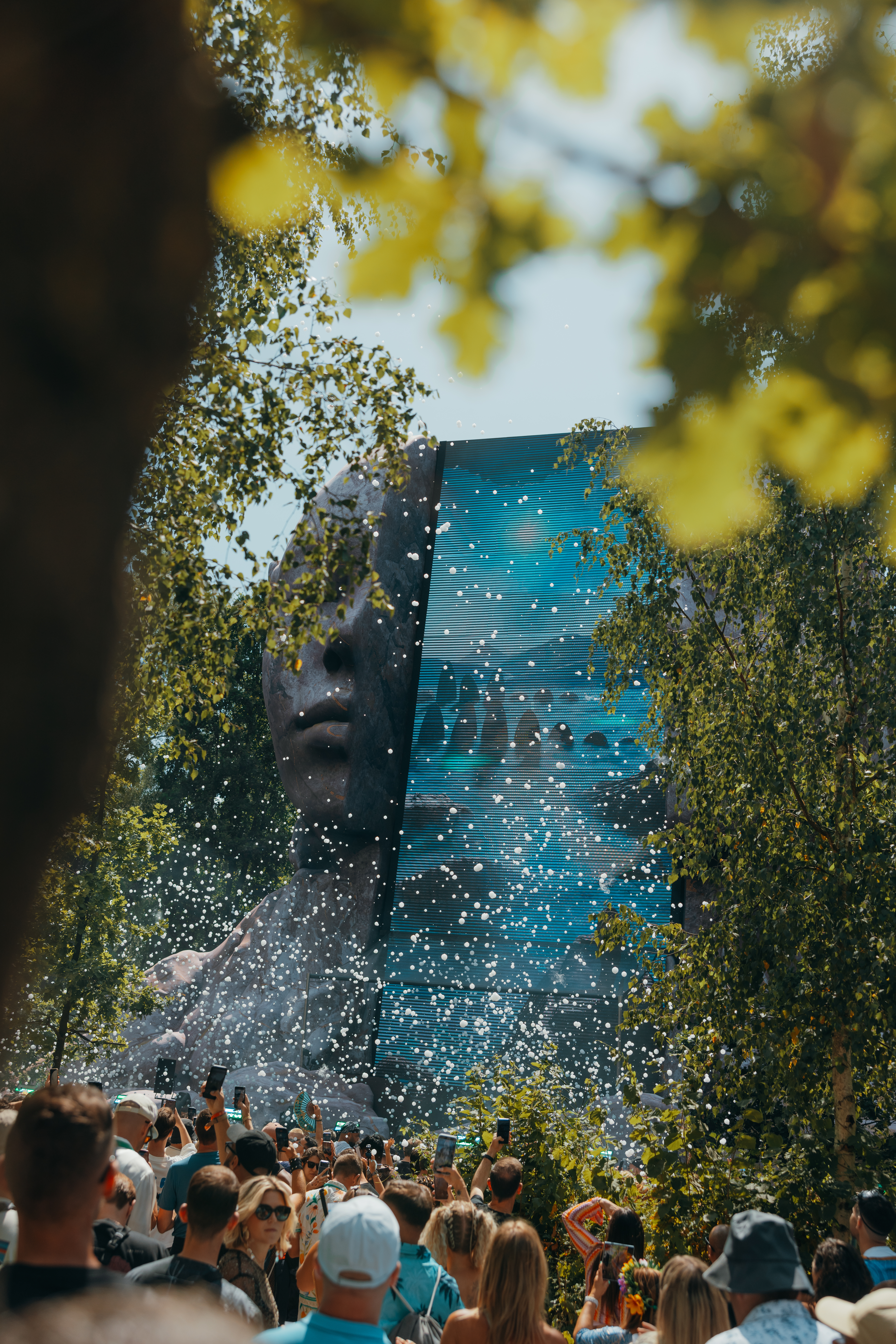
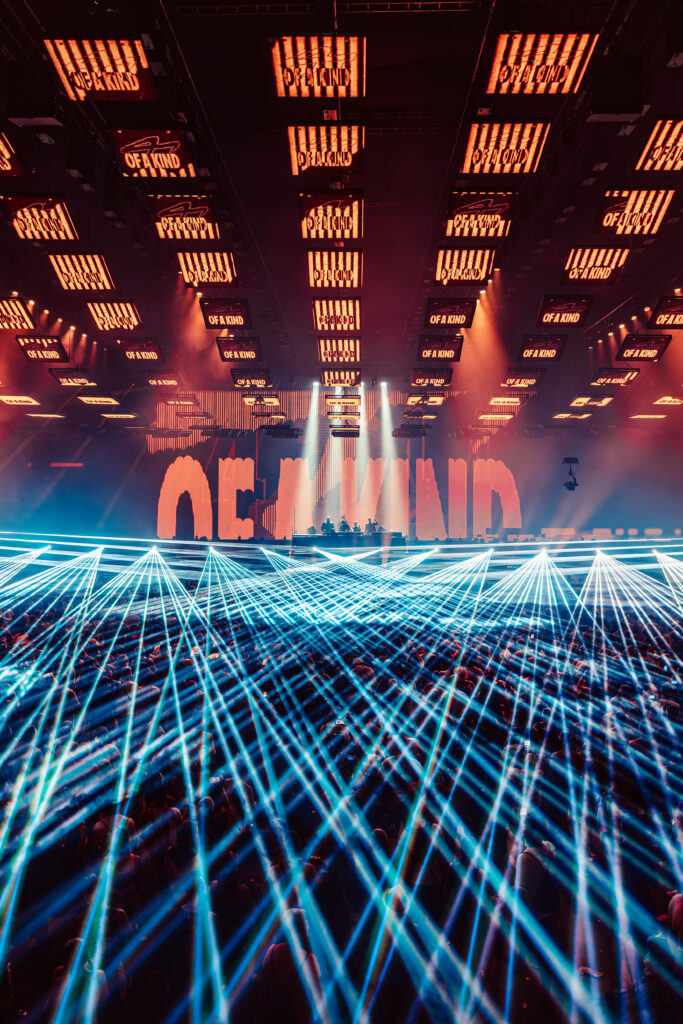
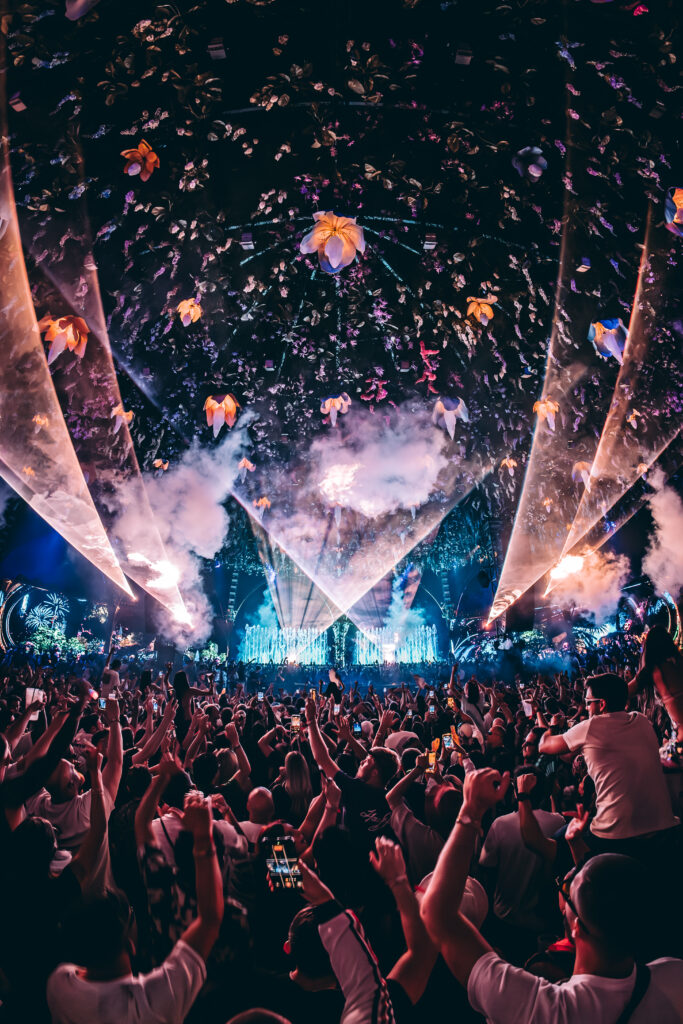
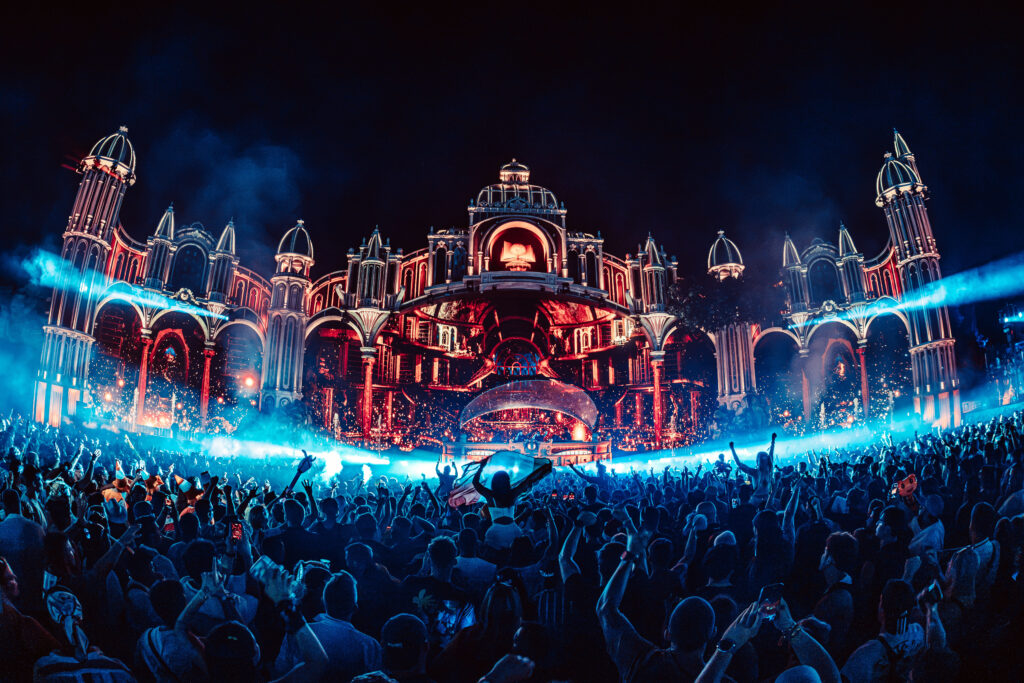
The lasers were particularly striking, creating intricate, fractal-like patterns that seemed to reach directly into the crowd. But the MainStage’s enormous central face remained the undeniable focal point, a massive, almost surreal presence that could stop you in your tracks.
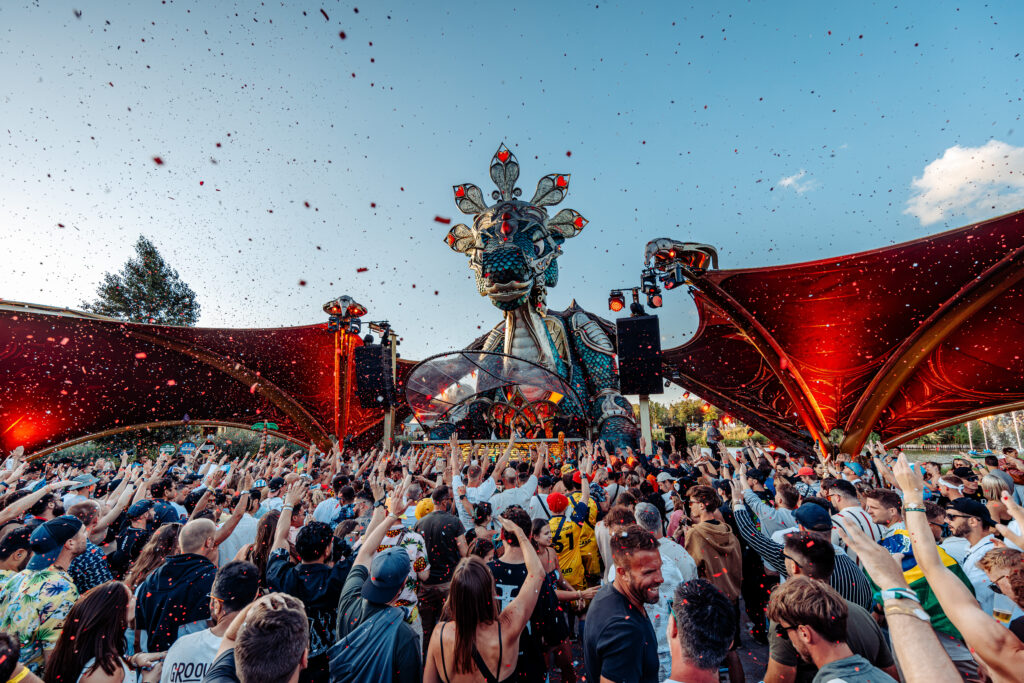
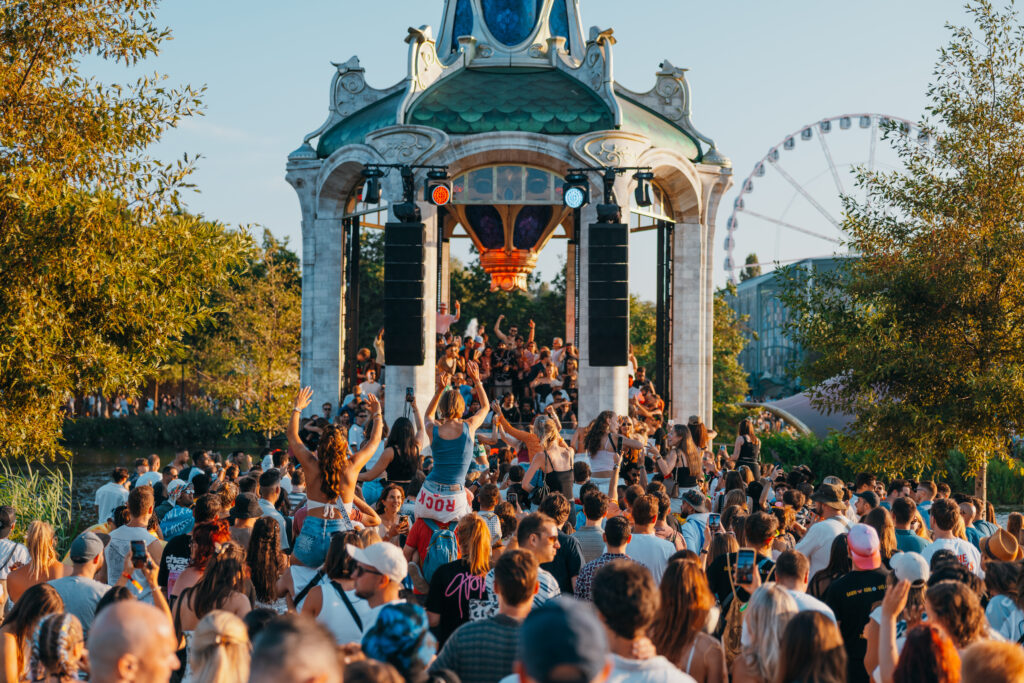
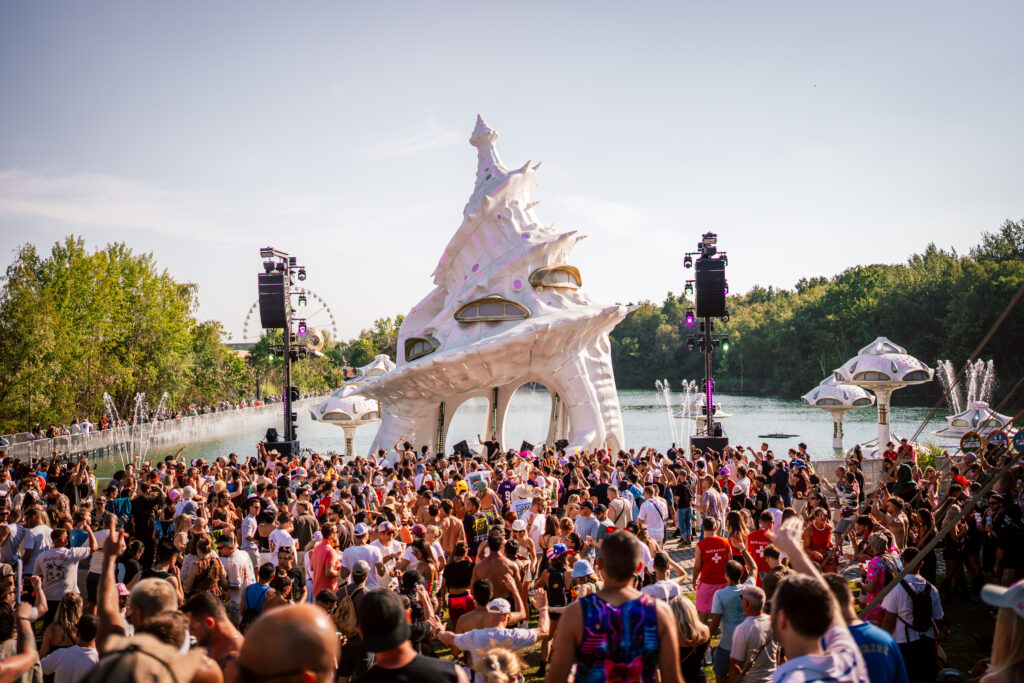
Tomorrowland brings the same level of attention to the entire festival site. Its 16 stages occupy very different corners of De Schorre, each with its own identity. CORE sits within the forest, Crystal Garden rises over the water, and the Rave Cave is tucked inside a stone tunnel. Over at Rose Garden, an enormous dragon overlooking the dance floor was impossible to miss, complete with long lashes, lipstick, and a habit of breathing steam over the crowd. Freedom offers a massive indoor setting with large-scale LED production, while Atmosphere provides a darker environment for harder sounds. New for 2026, Celestia replaced Rise with a butterfly concept inspired by themes of growth, trust, and transformation.
Then there was The Cage, a stage that felt like an underground warehouse hidden inside Tomorrowland. Dark, raw, and absolutely booming, it brought a completely different energy to the festival, an atmosphere that made it easy to lose yourself in the crowd. The only problem was getting inside. Long entry lines made it one of the hardest stages to access all weekend.
The production at Tomorrowland is core to the experience, from one end of the grounds to the other. The festival may be best known for its MainStage, but the surrounding forests, water features, architecture, lighting, and smaller stages further showcase deliberate attention to design across the entire site.
Music: A
Tomorrowland’s first weekend offered a musical journey through nearly every corner of electronic music. Progressive house and festival anthems shared the party with trance, techno, hard dance, bass, and more. From one stage to the next, the sound could shift completely, creating a festival experience that rewarded wandering just as much as following a schedule.
Friday wasted little time showing just how far Tomorrowland could stretch musically. The MainStage opened with heavyweights like Martin Garrix, Sebastian Ingrosso, and The Chainsmokers, while Berlin’s Marlon Hoffstadt brought his DJ Daddy Trance sound to the festival’s biggest platform in his MainStage debut. Belgian hard techno artist Novah also made her mark with a powerful first Tomorrowland appearance. At Atmosphere, the BPM climbed higher as Unreal Germany mainstay KUKO brought his emotional brand of schranz down on the People of Tomorrow, followed by French star Nico Moreno and hard techno high priestess Sara Landry, among others.
Saturday continued with another packed day of talent. David Guetta, Dimitri Vegas, FISHER, and Boris Brejcha took over the MainStage, while ILLENIUM brought his signature melodic bass sound to The Library for one of the weekend’s standout performances. At Freedom, trance heavyweight Armin van Buuren delivered a monumental set, while Planaxis hosted a Dim Mak takeover, featuring Laidback Luke and a surprise B2B from Steve Aoki and Reinier Zonneveld.
At Atmosphere, Indira Paganotto’s ARTCORE took over the stage with Interactive Noise, Ben Klock, BIIA B2B Charlie Sparks, and a live set from Reinier Zonneveld. The Spanish psymama’s curation moved between hardcore, psy-techno, and full-on psytrance, bringing both the hypnotic spirit and harder side of her label to one of the world’s most beloved festivals.
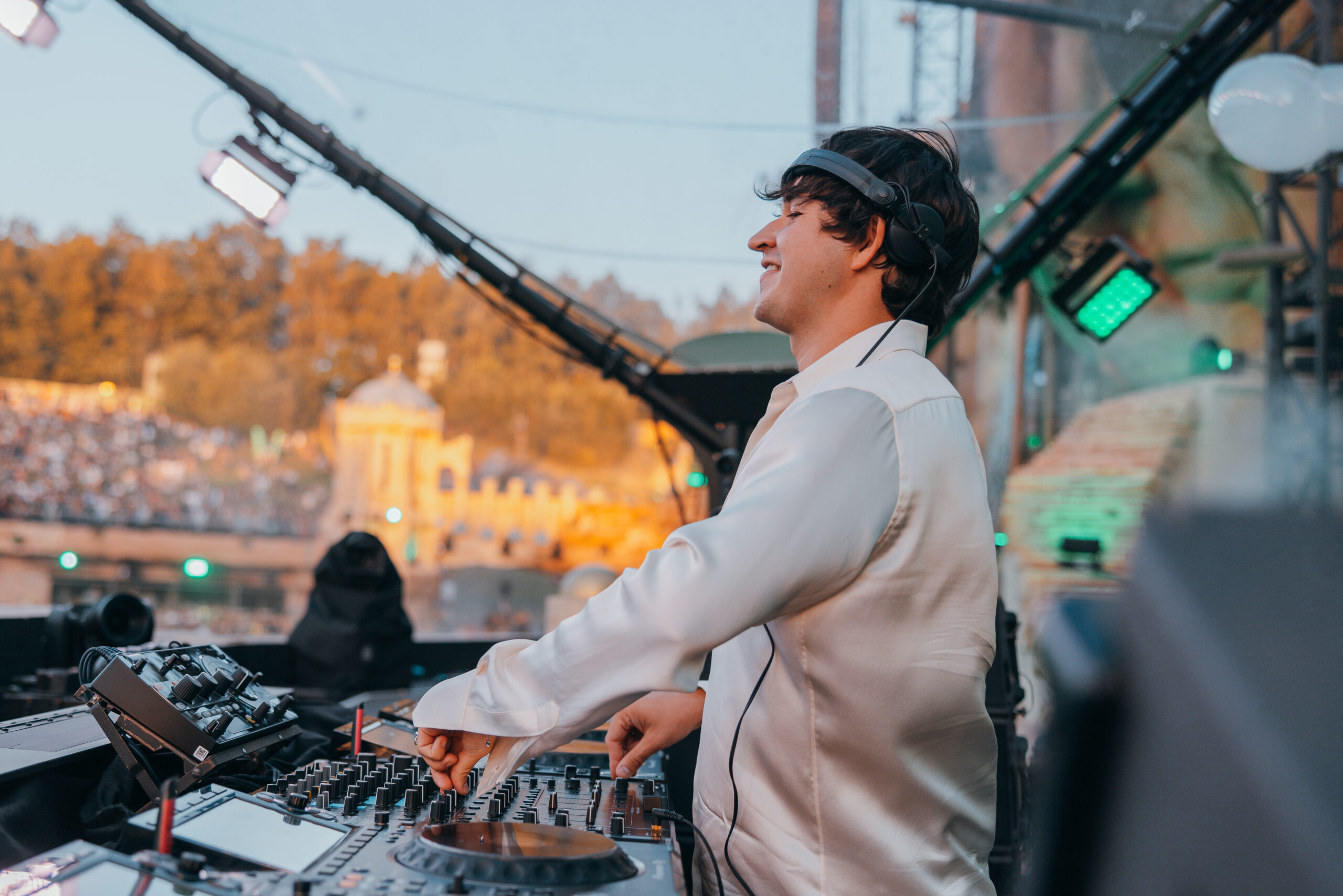
On Sunday, the MainStage played host to several of the weekend’s biggest talking points, with Alesso, John Summit, Calvin Harris, and a surprise appearance from Charlotte de Witte among the highlights. Nearly two decades into his career, Harris’ long-awaited Tomorrowland DJ debut felt like a full-circle moment for festivalgoers who grew up with his music. Hearing records like “Feel So Close” brought the golden era of dance music roaring back, delivering a dose of nostalgia for a generation that watched those records become anthems.
De Witte’s appearance offered a very different kind of moment. Fifteen years after her first Tomorrowland performance, the Belgian techno heavyweight emerged as the event’s unannounced mystery artist, playing acid and psytrance in an unexpectedly harder twist to the festival’s most familiar setting.
Atmosphere continued its harder-leaning programming with Amelie Lens’ EXHALE takeover, featuring Flour, ØTTA, SHDW B2B ÜBERKIKZ, and more. At Planaxis, Canadian label Monstercat took over with a bass-heavy lineup featuring Subtronics, Seven Lions, Liquid Stranger, and LEVEL UP, pushing bass music deeper into Tomorrowland. It was another sign of the momentum the genre is building globally, with the festival embracing the sound more than ever.
Dimitri Vegas & Like Mike’s Smash The House party concept took over The Library with Afrojack, Blasterjaxx, Vini Vici, and more. Dimitri Vegas also joined Timmy Trumpet behind the decks. At Freedom, French hard techno standout I Hate Models went straight for the jugular, delivering the kind of relentless set that has made him one of the genre’s leading names. Meanwhile, DJ Gigola had Crystal Garden locked in with her delightfully unpredictable selections, cueing up unexpected records that kept the crowd in motion.
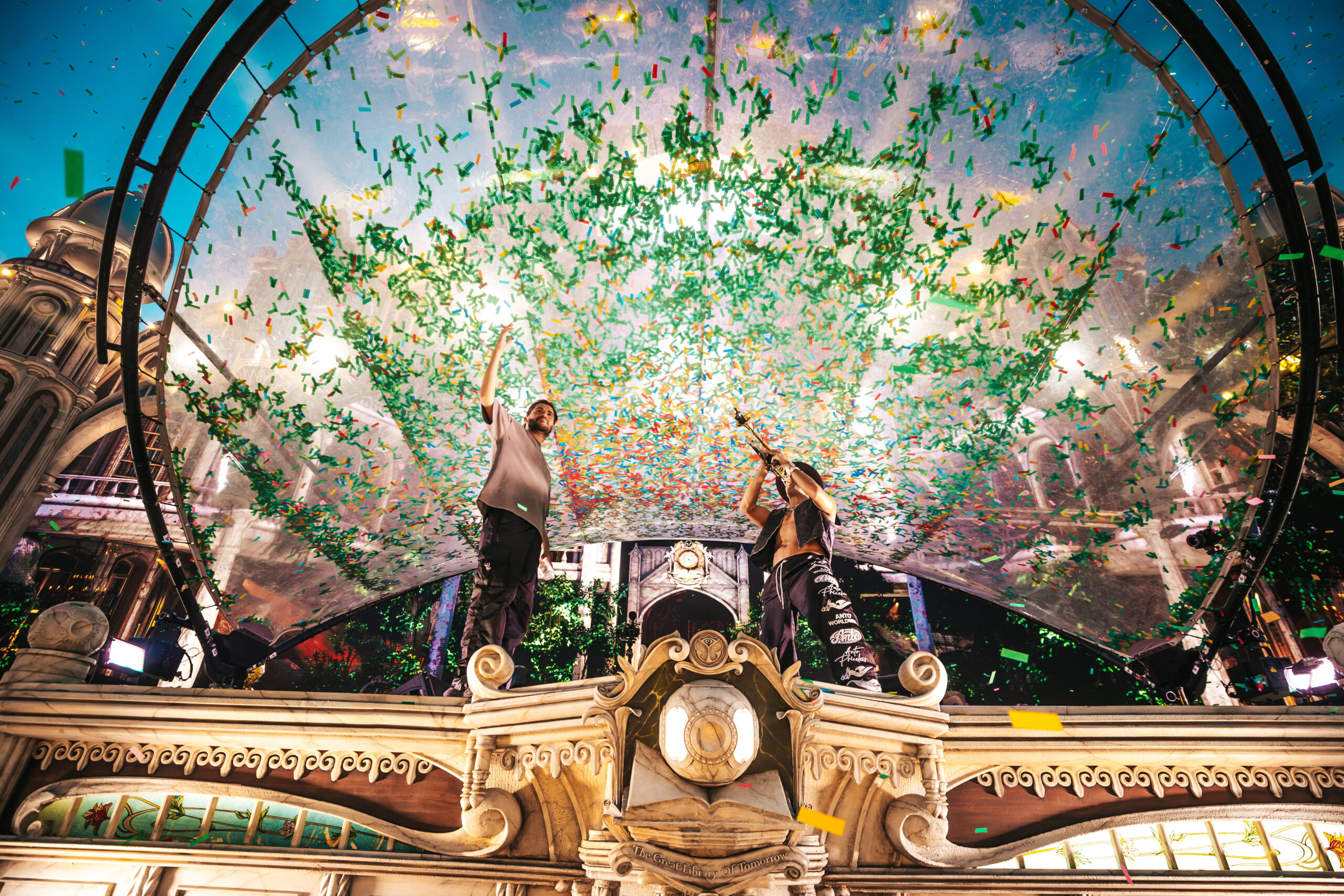
The Cage welcomed Tomorrowland’s newest host, Face 2 Face, touting its signature battle-style performance format. Rather than a typical B2B setup, two DJs went toe-to-toe from opposite sides of the booth, engaging in musical conversation. More than strong individual skills, the setup requires both DJs to listen, react, communicate, and build off one another while anticipating where the other might take the music next. Weekend one featured Adrián Mills F2F SISU, Serafina F2F Zwilling, and Fumi F2F HUJUS, among others.
Nostalgia was everywhere on weekend one. Tomorrowland track data placed “Turn The Tide” by Dimitri Vegas, Pat B, and Sylver, as well as Dimitri Vegas and Junkie Kid‘s remix of DJ Bountyhunter’s “Woops” among the weekend’s most-played records, alongside enduring anthems like Avicii’s “Levels” and Faithless’ “Insomnia.” Hearing those classics alongside fresh productions, festival edits, and unreleased tracks made up the weekend’s special sauce: Tomorrowland celebrated where dance music came from while looking to what comes next.
Hard techno had its home, trance had its champions, bass music had entire stage takeovers, and the MainStage seamlessly moved from one style to another. What stood out most was how naturally the lineup made room for so many different corners of electronic music. It was solid proof of just how much Tomorrowland’s musical world has expanded, without losing the sense of curation that holds it all together.
Venue: A-
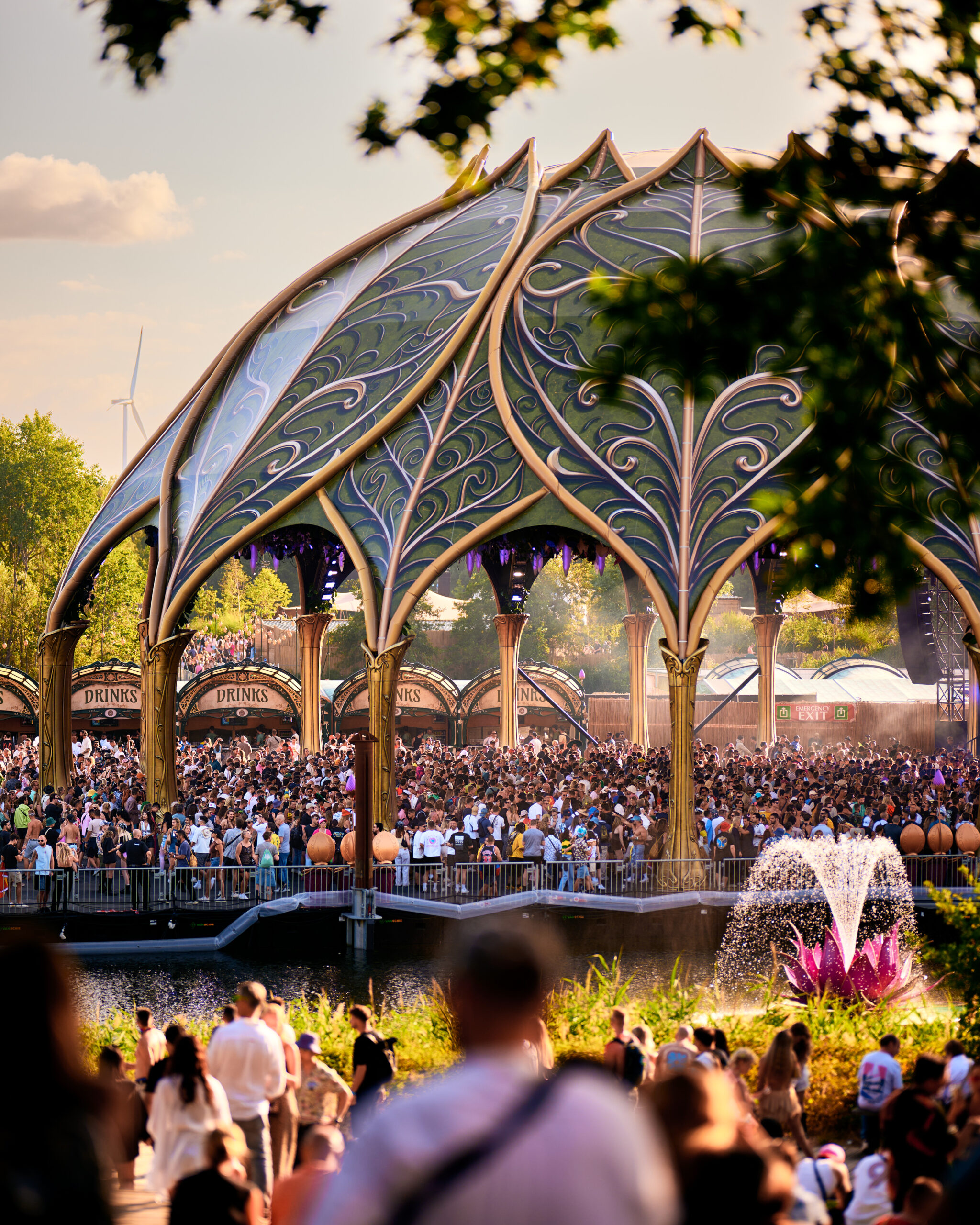
Tomorrowland’s home at De Schorre in Boom is a recreation area transformed into one of the world’s most ambitious festival sites. Located between Antwerp and Brussels, the park has been Tomorrowland’s home since its inception, and its sprawling landscape is large enough to accommodate the festival’s elaborate stages, installations, food and beverage areas, and other infrastructure for two weekends. This year’s event welcomed 400,000 people across both weekends.
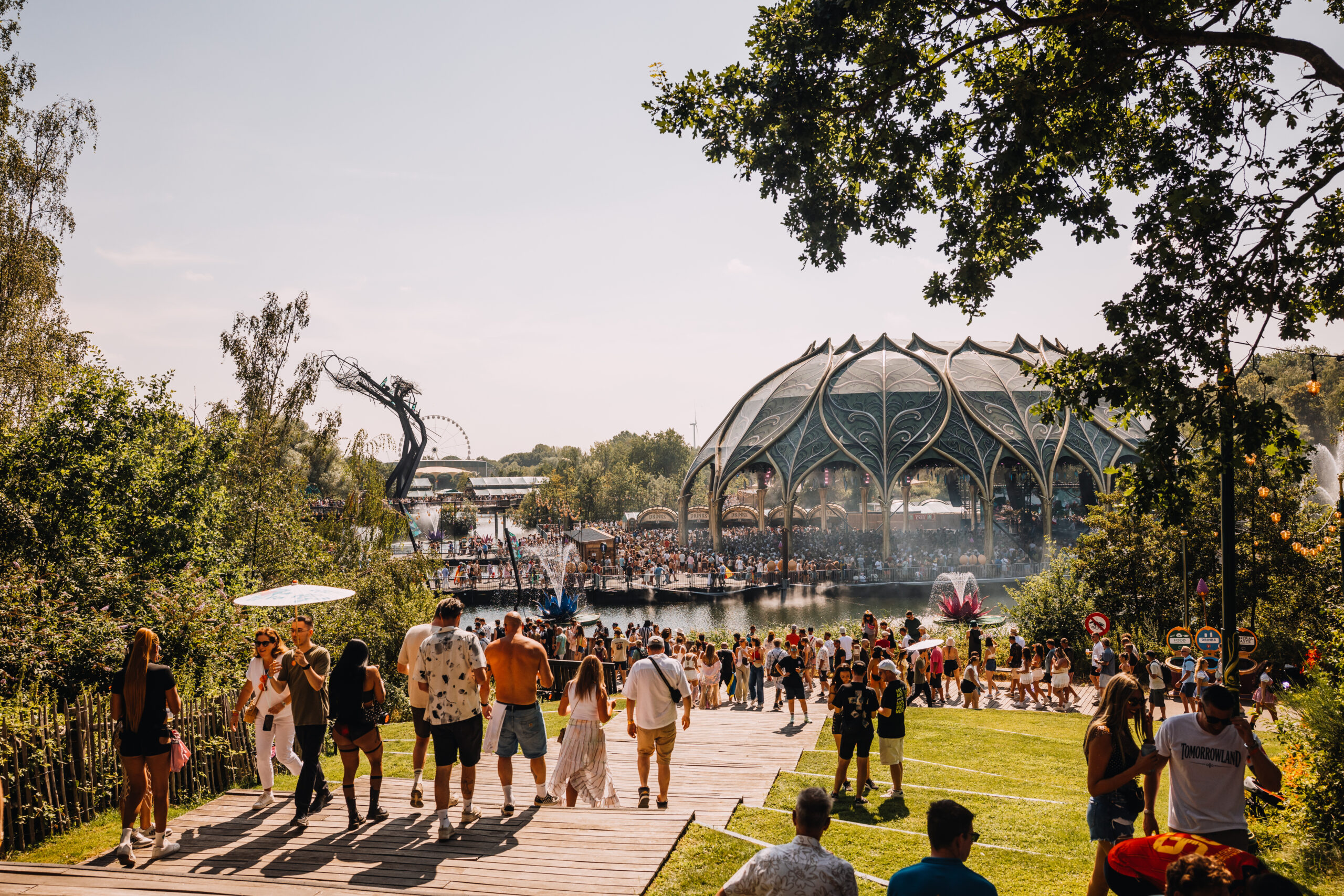
The first thing we noticed is just how massive the grounds are. Crossing from one side to another is a legitimate trek, and bouncing between stages can turn your schedule into a cardio workout. After a full day of chasing sets, our feet were feeling it. Bring your most reliable festival shoes because you are going to put them to work.
Still, the distance between stages supports a sense of discovery. The stages are distributed throughout De Schorre rather than packed into one central area. Each move sends you into a different pocket of Tomorrowland, with production, art, food, bars, and the surrounding recreation area filling the spaces between sets. Our feet were throbbing, our legs were cooked, and somehow the walk still felt worth taking.
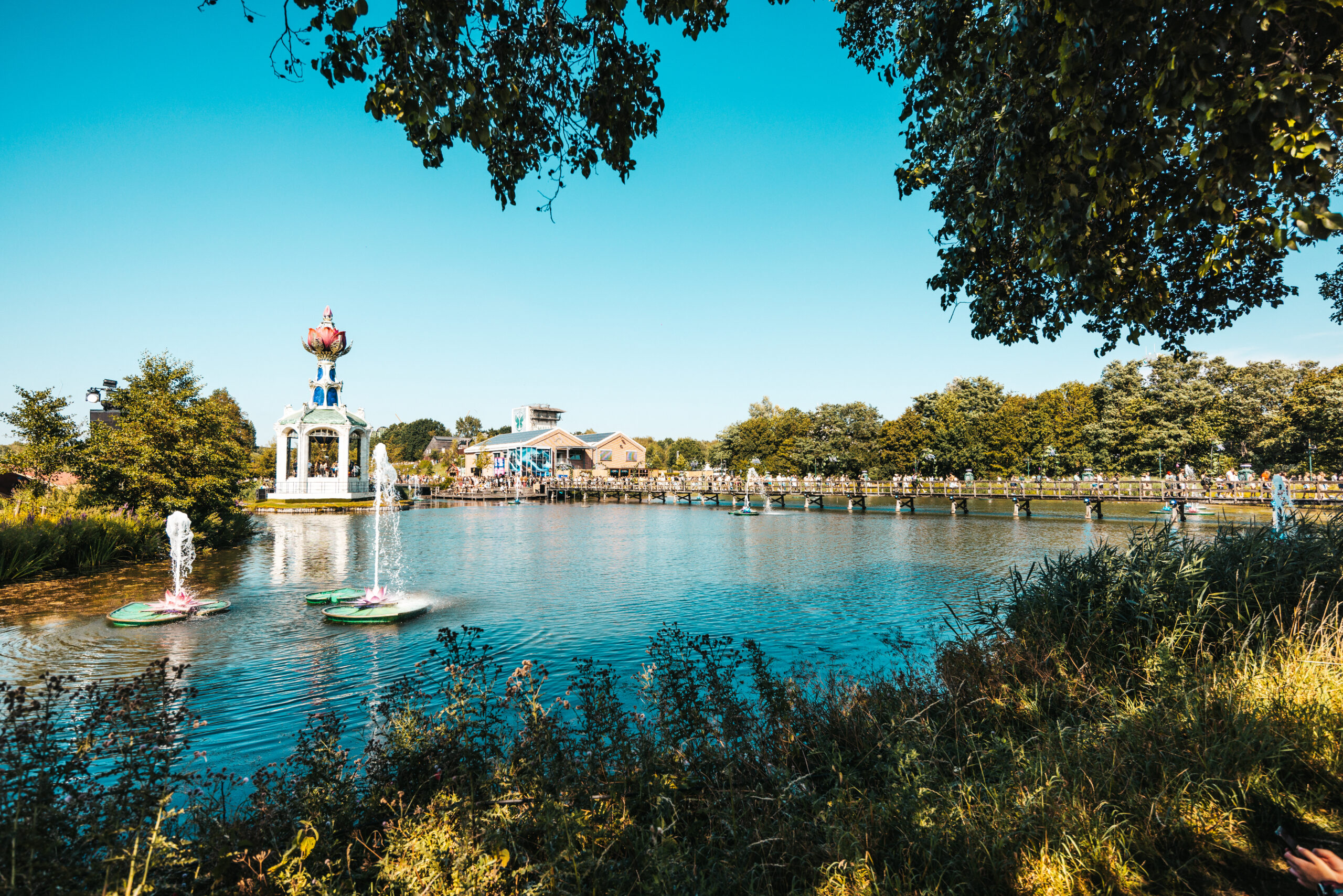
Tomorrowland has spent years shaping De Schorre into a world that reveals itself as you move through it, with towering structures, elaborate installations, wooded paths, bridges, lakes, and smaller details tucked into the landscape. Rather than staring down at a boring stretch of pavement, one path opens into a massive production, another disappears into the trees, and somewhere ahead you can usually hear the next crowd erupting.
Once we learned the map, the grounds became much easier to decode. The real test came when major sets let out and people poured onto the same pathways at once. What looked like a quick walk often turned into a slow migration, with streams of ravers crossing in every direction as the clock ticked down to your next set. Luckily, plenty of places made getting caught in a human traffic jam feel joyful.
Perhaps mind-blowing to many American festivalgoers, restroom facilities were exceptionally clean, orderly, and well-maintained, even as thousands of people moved through the grounds. It was an impressive detail that made a genuine difference.
Directly beside De Schorre, Tomorrowland’s 190-acre DreamVille camping community housed 38,000 visitors, offering amenities such as food, shopping, beauty services, and recreation areas. DreamVille also hosts The Gathering, a Thursday opening party exclusively for campers that starts the action even before the main festival gates open.
Sidequest-ability: A
Tomorrowland has a talent for making the main itinerary feel optional, and the best detours pull you into entirely different worlds.
Literally inside a cave, the Rave Cave’s dark, subterranean energy felt completely detached from the festival above it, as festivalgoers squeezed inside and watched Tomorrowland disappear in a distinctly intimate and sweaty music experience.
Outside the Moose Bar, strangers built towering pyramids out of oversized beer pints, watched them collapse, scooped everything back up, and started again with whoever happened to be standing there. People rotated in and out while the game kept going. Step through the doors and the space mutates into a full-blown nightclub. You can explain the Moose Bar, but you really have to stand inside it to understand it.
The Avicii Tribute Experience hit us right in the heart. Original artifacts, archival material, studio footage, and an immersive audiovisual presentation gave us a rare chance to feel close to one of our favorite DJs again, if only for a few minutes. For a moment, it felt like he was back at Tomorrowland with us. We walked out in tears, carrying a strange mix of happiness and heartbreak that comes with remembering someone who meant so much to so many. In the middle of such an upbeat weekend, it gave us a chance to pause, remember how precious life is, appreciate the artists who shape our lives, and cherish the people we love while we still have them with us.
Elsewhere, the Tomorrowland Post Office lets you send a postcard from the festival, though its hours are limited. Meanwhile, the Amare Ferris Wheel, Chapel of Love, hidden cocktail spots, roaming performers, and other little discoveries gave us plenty of reasons to abandon the route to our next set.
Above all, Tomorrowland rewards getting lost. The schedule tells you what comes next. The side quests are what you stumble into between it all.
Food & Beverage: A
Tomorrowland’s renowned cuisine is much more than a collection of festival staples. Everything runs through “pearls,” the festival’s cashless currency system. €20 converts to 10.5 pearls. We found everything from quick, affordable bites to meals substantial enough to carry you through several hours on the dance floor.
We tried “magic mussels” for 11.5 pearls, smash burgers for 7.75 pearls, “steak away” for 9.5 pearls, and a pulled pork banh mi for 7.5 pearls. Our clear favorite was the Korean fried chicken burger for 7.75 pearls, with sweet potato fries for another two pearls. At a slightly higher price point, the roast chicken with grilled vegetables was another standout for 13 pearls.
The desserts and drinks were just as varied. A Tomorrowland waffle with chocolate topping cost seven pearls. Frozen yogurt cost five pearls, and the Pinky Ice Dream was 4.75 pearls. Our favorite drink was the passion fruit bubble tea for five pearls, with a shot of vodka available to add for another two pearls. Lines varied throughout the grounds, but there was enough choice that you could usually find another option if one spot was packed. Other options for vegetarians, vegans, and other dietary restrictions were available across the grounds.
One of our more memorable food discoveries was the Thai food experience at Papillon, including its hidden “Lost in Thaislation” speakeasy. Red curry and pad krapow croquettes brought Thai flavors into the festival’s food landscape, while the dining experience felt like a natural extension of Tomorrowland’s international identity.
Overall: A
Tomorrowland 2026 felt like the clearest expression of what happens when a festival pours love, imagination, and relentless attention into building its world year after year. Consciencia didn’t just usher in Tomorrowland’s third decade—it showed off the years of building, refining, and dreaming that came before it.
The production is enormous, the music touches almost every corner of electronic music culture, and the crowd carries a warmth that makes the experience feel human. Over 20 years of care have created something that is difficult to replicate. You can’t manufacture that kind of history overnight.
Tomorrowland is an investment, but the festival’s opening weekend made a convincing case for making the journey. We’d return in a heartbeat. Come ready to walk until your feet are throbbing, leave room to get gloriously lost, and give yourself more time than you think you need between sets; Spend the extra Pearls on the food, chase the strange corners of the grounds, and let yourself miss a set if something unexpected pulls you away. At Tomorrowland, it’s worth getting lost.
Featured image courtesy: Tomorrowland.
