
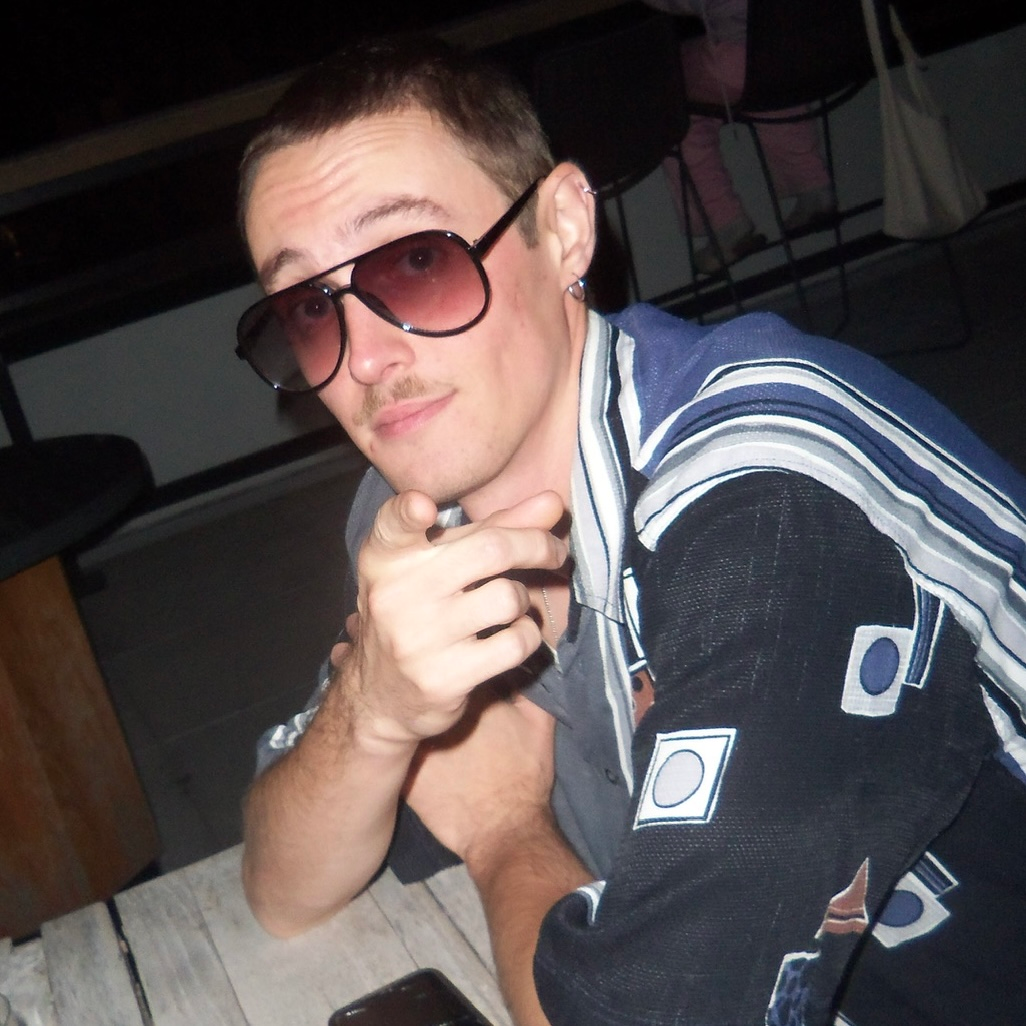

Tehran-born producer and DJ Ardalan Noghre-Kar—better known as Ardalan—has seen it all in the nearly 13 years since his debut track, “Mr. Spock” helped put Dirtybird Records on the map in 2010.
The industry has changed considerably since then: social media campaigns accompany music releases; new tech like AI threatens age-old creative processes; even Dirtybird now hosts its own festivals.
But through it all, Ardalan has remained a powerful creative force – constantly evolving, just like the industry that changed his life at the age of 19.
In the years since his instrumental role in the early days of Dirtybird, Ardalan’s signature flavor of hypnotic house and techno has made him an underground fan-favorite. His 2023 is off to a roaring start with tour dates galore and the release of his latest EP, The Maniac. Ardalan’s second full-length album is also on its way soon.
Known for his fun-loving demeanor, Ardalan rarely misses a good party. In fact, he throws lots of them himself. His Ardy Pardy events are popping up across the map in cities like San Francisco, Chicago, and Miami, and with a rich and passionate relationship to his dance music experience, he has emerged as a true spokesman for the culture.
Ardy was kind enough to chat with EDM Maniac after his set at John Summit’s Off The Grid event at The Caverns—a venue that seems tailor-made for his no-rules swagger.

EDM Maniac: You’ve had a career that was born and is still very rooted in the underground, so I have to ask… Does it get any more “underground” than this? Where does a show like this rank among the many unique venues you’ve played?”
Ardalan: I think it’s amazing that what John Summit is doing with an event like this is bringing out the younger generation, the older generation, and bringing them together. Doing something like this in America is truly special. Playing a cave and bringing his friends and doing something so grand feels very special.
I consider myself kind of a chameleon, where I like to play big shows, but also small shows. I just like it all. It’s like a buffet for me. I’m so ADHD, I can’t decide like “Oh, I want to do this with my career,” I just want to make music and have fun and get it to as many people as possible.
EDM Maniac: Your signature Ardy Pardy events have been picking up steam and you’re no doubt a host with the most on the decks… What makes a good party?
Ardalan: There’s a lot of work behind it, but it’s so fun—the dedication and everything, and making sure everything works right—you need a little bit of that organization, but I’ve been keeping the same formula since I was 17, you know? I just want to have fun. Have a good time and keep that same gratification of being a listener, but also being a DJ and producer. Keeping that momentum. You’ve gotta go listen to music.
Once you get so into it, you can get jaded, but for me it’s about finding new music, getting with friends, meeting them, and then I’m like, “Alright, play my party” because you’re cool; and let’s get everyone together, and it’ll be like a house party vibe, but in a bigger setting. Very natural. It’s never felt like work, but you definitely have to be on top of it. And it’s really fun now to curate a program of music for the night.
EDM Maniac: What goes into that preparation process for you?
Ardalan: For me, it’s the same as when I’m searching for music. I’m always looking for new artists or new music – as deep as it goes – but also getting people and friends that really turn up and have that same energy as the crowd. Playing for the environment, playing what they want, but making it fit in in a way – just tell a story. And that feels really good.
I like it on every scale, small, intimate, big—there’s no rules. We’re off the grid! I feel like we’re in a place right now, in this day and age, where everyone wants to see everything. And it’s good to have, it’s good to test – not test it – but just like, not play it safe, you know?
EDM Maniac: In that same spirit of not playing it safe… If you could take an Ardy Pardy anywhere in the world, where to?
Ardalan: There are so many dream spots because I like to go camping; I like nature; I like hiking.
There are places in Colombia. I actually threw a small party in this backpacking town called Palomino when I had a show at Salón Amador in Medellín. I hit up a friend that I met a while back; it feels good when you’re personable with people. So we threw a party on a Monday night on this beach town at a hostel. And it went until like 7 in the morning; there’s dogs everywhere. So Colombia, that’s one place that’s one of my favorites. Also Canada, but my dream place is Big Sur.
That’s why I really respect John for doing something like this, because it’s so special when you can find a place where you can do it and get people together. We’ve been doing this for what—thousands of years? Finding a really cool location, where you don’t have to chuck it on YouTube—just go there, you know? It’s great, so Big Sur would be one place where I’d want to throw a rager. And because I’ve played small parties; big parties—there’s just no rules. It would also be great to do a party in Iran, where I’m from.

EDM Maniac: In your experience, how do small and large venues serve performances differently?
Ardalan: I think playing small venues is needed to understand the different dynamics of a crowd and also make you more susceptible to the crowd. I love playing to the crowd; I love playing my own stuff. It’s the push or pull, that’s how I see it. It’s an energy where you’re like, “Ok, I’m gonna play something that people aren’t used to.”
I love intimate parties, I need it in my life—and the big parties too. I know people get jaded with playing to bigger crowds—you have to play to a formula, but there are ways of doing it. There’s that quote: “Quality is Job 1.”—Quality is not job number one, being amazing is job number one.
And I don’t mean that in an “Oh, I’m amazing” way—it’s just where you’re giving every inch of what you have; no matter whether it’s a small gig, or a big gig, or an empty show. Just have fun like you had fun when you started in your bedroom; and that’s the same formula that I’ve kept. So every day feels like that same day. Otherwise, why would I be doing this? I’m 33 now, but I still feel like I’m 20 and I’m like, “Wait, where am I going?” I just love uncharted territory.
EDM Maniac: You came up in the Bay Area scene, at a time when new technology and the internet were shaping the modern music industry… What was it like watching those changes take shape in real time? What did your time in the Bay Area teach you?
Ardalan: I moved to San Francisco in 2012, so I caught the last bit of the most amazing period of time—before the tech really took over and drove people out of the city.
But for me, living in San Jose; and going to Burning Man for the first time when I was 20; and meeting all the people doing underground parties—like the Sunset Crew and then early Dirtybird—they’ve really been a huge inspiration to me. No matter where you are, no matter how much control you have, it’s a playground. I always stick to that formula of what they taught me. Bringing good music.
The first time I ever DJ’d, I DJ’d on a rotary mixer at this club called 222 Hyde in San Francisco. It was where Miles Davis used to do his afterparties in the 50s in the green room—some sick history. When I was 19, I went to this festival called Symbiosis in Yosemite, and I got a ticket by being like a merchant—giving water to people—and that blew my mind. And the next year I had my “Mr. Spock” release with Justin Martin and everything changed. So I feel fortunate and lucky, but I was also so determined to do this – and not just for myself, you know?
Why are we doing this? Is it to get energy? The energy you get from people and seeing people dance is just – I don’t know how to describe it – but it’s the main thing about everything. It’s not about me. It’s about them. And I feel a privilege and appreciation for being able to bring what I can bring. That’s what I learned from early Bay Area culture and dance culture.
We used to go to this place called “the compound.” We used to drive 45 minutes from San Jose. It’s like a techno compound, the DJ booth is in the middle, 150 capacity, all crazy music. Mark Zuckerberg was there one time. Kind of crazy.
EDM Maniac: So much culture. Do you feel like the true underground has gone by the wayside at all?
Ardalan: A lot of the techno and house stuff used to be underground and now I feel like it’s mainstream. European house and techno—it’s like it’s everywhere now, which is amazing, but there’s so much music. I feel like the younger generation—now I feel like an old person. They just love every type of music, so it’s fun and that’s great for me because I love to play everything. I’m like a chameleon. I want to play everything. It’s like going to a buffet—“Oh, I have options! Thank you!”—I want to do everything and it feels nice to see what works and what doesn’t. I feel like this generation is susceptible to everything. I think we’re in a place where we have the freedom to do a lot more creatively and it feels great.
With social media, it’s easy to fall off with it. With me being a millennial, we always talk about it. We were the threshold of having no internet. That was me in Iran. Growing up, I’m playing outside, playing hide and seek, playing games—and then things changed to full internet, you know? Having seen both worlds is a really interesting place to be. But I respect Gen Z so much because they took what we had and made it even crazier. I talk about Gen Z a lot lately—it’s interesting.

EDM Maniac: Throughout your career—from Dirtybird, to Walker & Royce’s Rules Don’t Apply, and even this most recent release on Desert Hearts Black—you’ve always released your music on independent imprints… What does it mean to be part of an independent label today?
Ardalan: You know, it’s something that I’ve always been used to. I’ve never had that traditional contract with a label. Even with Dirtybird, I’ve always had an independent feel, so I’ve never felt like I’m obliged to be one thing. With the Dirtybird crew, I thought of them as a family. I’m the type of person that reciprocates or feels energy, and they took me along, and I found a family where they gave me a platform to do what I want to do. Not what they want to do. A lot of people don’t get that and that’s why I stuck with them, because they gave me that platform to do whatever I want to do.
So I’ve always been independent and I feel lucky that I’ve been independent. I don’t know how it is for some people that have been where it’s a contract, where you feel like you have to work—because it’s never felt like work!
EDM Maniac: In comparison to your own rapid rise with Dirtybird, have you seen any changes in the process of coming up in the industry?
Ardalan: It’s a very interesting question, because for me, the first song I ever made was “Mr. Spock.” I made other songs, but then Justin took it and made it more structured. I feel like I was this anomaly. I originally wanted to be an industrial designer—automotive design—I wanted to make cars, design cars. Then that happened, and I changed completely—like 180 degrees to music.
I feel like there has been some change, especially with social media, and I’m not hating on it at all. It makes sense that people want to see more of the entertainment factor, but in the long run, the music is the answer.
Not to sound like, “Music is the answer,” but I think you have another platform besides the music, and I can see why some people aren’t used to it, especially my generation, Gen X, but I feel like it’s another avenue of curating your style of things.
I’m at this point where I want to do visual stuff – movies, cinematic stuff – like a story. I feel like everyone in the world, since the dawn of age, wants a story. It’s all about stories. Stories are what take us around the world. Some stories will take us in the wrong directions, some stories will bind us. Now we’re getting hella philosophical, but that’s as deep as it gets—you know what I mean?
The process of making music is the most genuine thing to me—that craft of working. Being ADHD, you never feel present, but that’s the moment where you make a song, you make a kick, or like a synth line that reminds you of a friend—like synesthesia—and I love that feeling.
EDM Maniac: With all of these stories in mind, what is the story behind your new EP, The Maniac?
Ardalan: So I’m writing an album now; moving into this territory where I’m really infatuated with early 80s sounds. Like analog, post-disco, pre-house music, italo—it’s just infatuating; Trevor Horn, Yello, Kraftwerk—to like Detroit stuff. It’s basically like the ingredients of what happened to house and techno. So I’m going back to that. I went through some catalogs of the songs that I had that were almost complete and each song is from a different era of my career.
For The Maniac, I originally made it in 2018; I was going to put it on my album. And it was like more banging big snares and I turned it into a little bit more like stripped down. I wanted to go like Hans Zimmer—cinematic you know? Like a lot of analog, digital, all cinematic sounds.
Kill Frenzy came to my studio in San Francisco in 2020, right before the shelter-in-place happened—we were supposed to play a show. and We made the song, “Paravision” and I was like, “This needs to be released. Let’s release this—it’s the last thing we worked on.” At the time, he was like, “What do I do? Should I leave? The country is closing up.” I was like, “Get the fuck out of here. Go to your girlfriend.” And he left and I haven’t seen him since we made that song.
I feel like the EP is basically about how everything is changing to AI, the noise, and everything. And that track really kind of reflects that – like full techno terminator vibes. I love that whole dystopian thing. I love that like 80s thriller sound – you’ve got all these analog synths playing. I was born in 1989, so to be able to do that and make it a story, and then use AI to promote it is like a paradox. I love fucking shit up.

EDM Maniac: What can you tell us about your upcoming album?
Ardalan: So I tore my ACL playing soccer after 2021, and my manager was like, “Hey, why don’t you come to LA for a month?” He took me to the studio and I played some of the stuff that I was making, like more italo stuff. And this incredible producer that owns the studio, his name is Jean Michel. He was doing all this crazy stuff in the 90s, like pre-Daft Punk, deep house. He’s got incredible ears – I’m very picky with the people that I work with. He’s like, “I’ll help you do this album; we’re gonna do like this 80s style.” I never thought I would meet someone that had that vision like I do. He’s French-Canadian; I’m Iranian, so we have that international factor. And it’s just like this is what I want to do: like Trevor Horn – the guy who produced “Video Killed the Radio Star” – one of the most magnificent producers in the world. Yello. All those guys, and then bring in Detroit elements.
I’ve never met anyone that has that same vision. I feel like I didn’t have one for Dirtybird, so now I feel like I want to do something that goes back to those roots, and also brings back my Iranian roots. So this album is going to be a very personal message – from my roots in Iran when I grew up. I moved to the U.S. when I was 16. I went to an international school in Iran, so making it more international, you know? And making good, fun music. Making songs. I’m singing on it now – writing lyrics, doing songs. My dad played the sax on one of the songs. It’s called “Call It a Night” – which is about when you want to call it a night, but you can’t, you know?
So I can’t wait. I want to finish it, but it’s been a little bit of a process because I’ve been touring, working on singles and everything, but its been a fucking ride. I’m so lucky and fortunate. It’s been a roller coaster – it’s been rock and roll – and I’m aware of it. It feels really good as an artist to be able to express that side – where it’s like “Oh, I’m gonna make everything. I don’t give a fuck.” We’re off the Fucking grid!
EDM Maniac: Throughout your career – from Dirtybird, to Walker & Royce’s Rules Don’t Apply, and even this most recent release on Desert Hearts Black – you’ve always released your music on independent imprints… What does it mean to be part of an independent label today?
Ardalan: You know, it’s something that I’ve always been used to. I’ve never had that traditional contract with a label. Even with Dirtybird, I’ve always had an independent feel, so I’ve never felt like I’m obliged to be one thing. With the Dirtybird crew, I thought of them as a family. I’m the type of person that reciprocates or feels energy, and they took me along, and I found a family where they gave me a platform to do what I want to do. Not what they want to do. A lot of people don’t get that and that’s why I stuck with them, because they gave me that platform to do whatever I want to do.
So I’ve always been independent and I feel lucky that I’ve been independent. I don’t know how it is for some people that have been where it’s a contract, where you feel like you have to work – because it’s never felt like work!
I feel like everyone in the world, since the dawn of age, wants a story. Stories are what take us around the world. Some stories will take us in the wrong directions, some stories will bind us. Now we’re getting hella philosophical, but that’s as deep as it gets.
Featured image courtesy: Ardalan.