When it comes to scale, Los Angeles may just be the techno capital of the United States (taking nothing away from Detroit, of course). But in the first four years since the region’s leading electronic promoter launched its flagship genre event in LA, Skyline Festival struggled to serve its community with a venue capable of corralling one of the country’s most enthusiastic techno scenes.
That changed last weekend when the two-night event from Insomniac’s Factory 93 debuted at Ace*Mission Studios. Not only did Skyline’s new home give ravers newfound room to boogie, but its unique location—nestled between train tracks along the LA river, city bridges, and mural-covered buildings on Anderson Street—served up an industrial aesthetic that rooted the event in the city’s underground music legacy.
After several venue moves over the years, the festival may have found its forever home at Skyline’s fifth edition, held on February 28 and March 1. With downtown views and a remarkably comfortable dancefloor experience complementing an elite lineup of global and local house and techno DJs, it was the festival’s best edition yet.
Read EDM Maniac’s complete report on Skyline 2026 below.
Quick Takes
Best moment: Trains rolling past daytime sets at West Side. The Blessed Madonna and HAAi’s genre-spanning sunset B2B. I Hate Models’ ferocious, pyro-filled performance.
Needs work: Art installations. Places to chill.
Hidden gem: Local DJ showcase and cover from the heat at the indoor Arts District stage. Underground stalwarts on the Resident Advisor-hosted Downtown stage.
Audience Match
Who this festival is for: Tracklist librarians, dance circle celebrities, underground aficionados.
Maybe skip if: City festivals aren’t your thing. You need comfortable places to sit and rest. You want to stare at visuals on a screen.
Vibes: B+
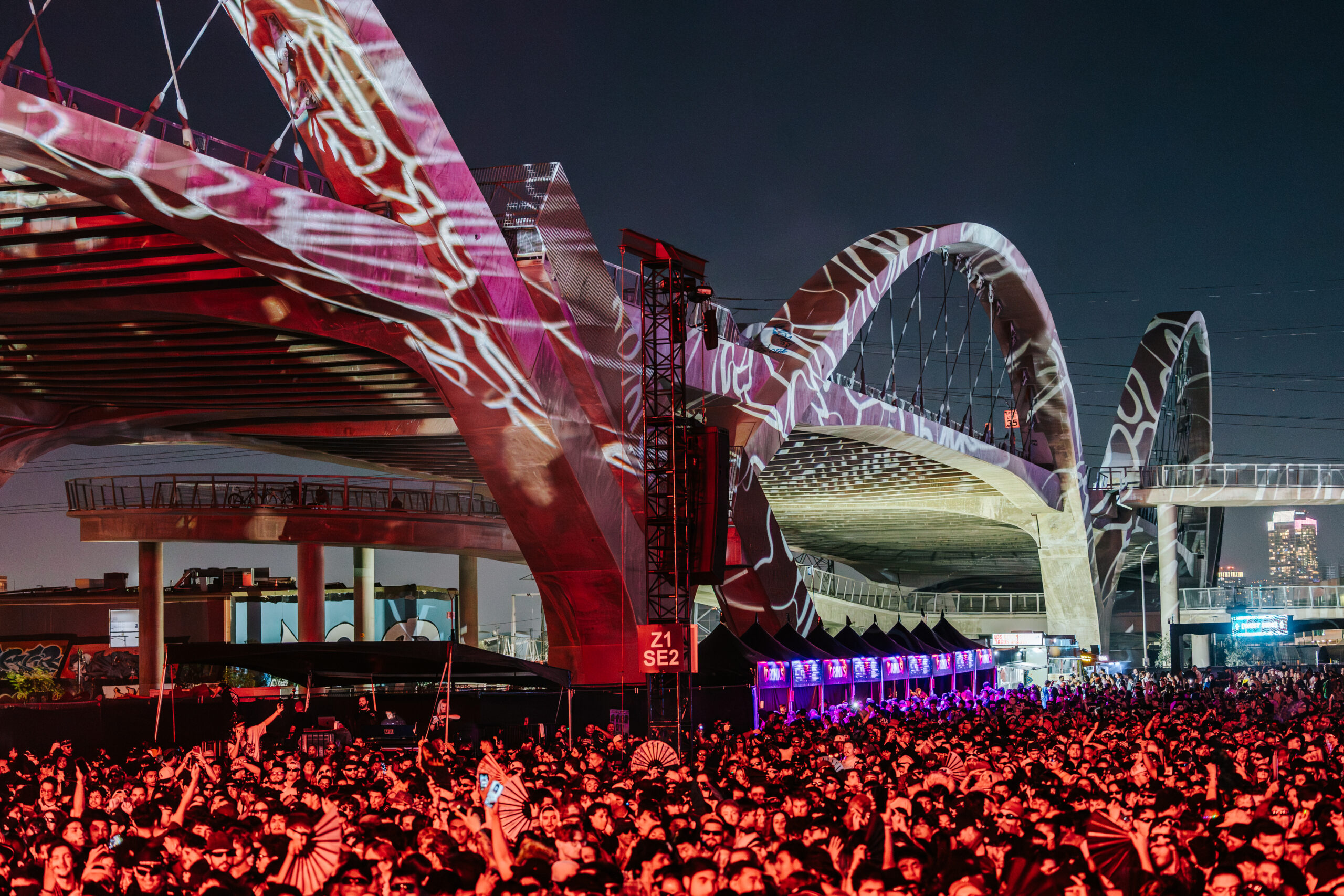
Over years of raving in Southern California, we’ve found LA’s large crowds can be hit-or-miss. However, as the scene confronts challenges to its dance floor values amid house and techno’s global swell, Skyline’s lively bunch embodied PLUR at a level we’ve rarely come across at a festival of this size in the city.
This year’s crowd was kept happy with more breathing room to dance and roam the venue, and it showed in the energy we experienced on the dance floor. Crowds were expectedly dense and more agitated in the pit, but our interactions with fellow ravers were overwhelmingly respectful. We had plenty of space to move and dance freely, and those moving past did so politely.
Though energy wavered during a few main stage moments (we were surprised to see a fairly sleepy crowd during Beltran’s set), attention was dialed in for some of the world’s most in-demand DJs, including electric moments of shared release during sets from I Hate Models, 999999999, KI/KI, and The Blessed Madonna B2B HAAi. The vibe remained distinctly LA. From fist-pumping to shuffling and twerk circles, it was rowdy in all the right ways.
No festival crowd is perfect, but we didn’t witness any physical fights or excessive aggression. Though we encountered some folks who had pushed beyond their party limits, it was good to see festivalgoers and medical staff work together to get them the help they needed.
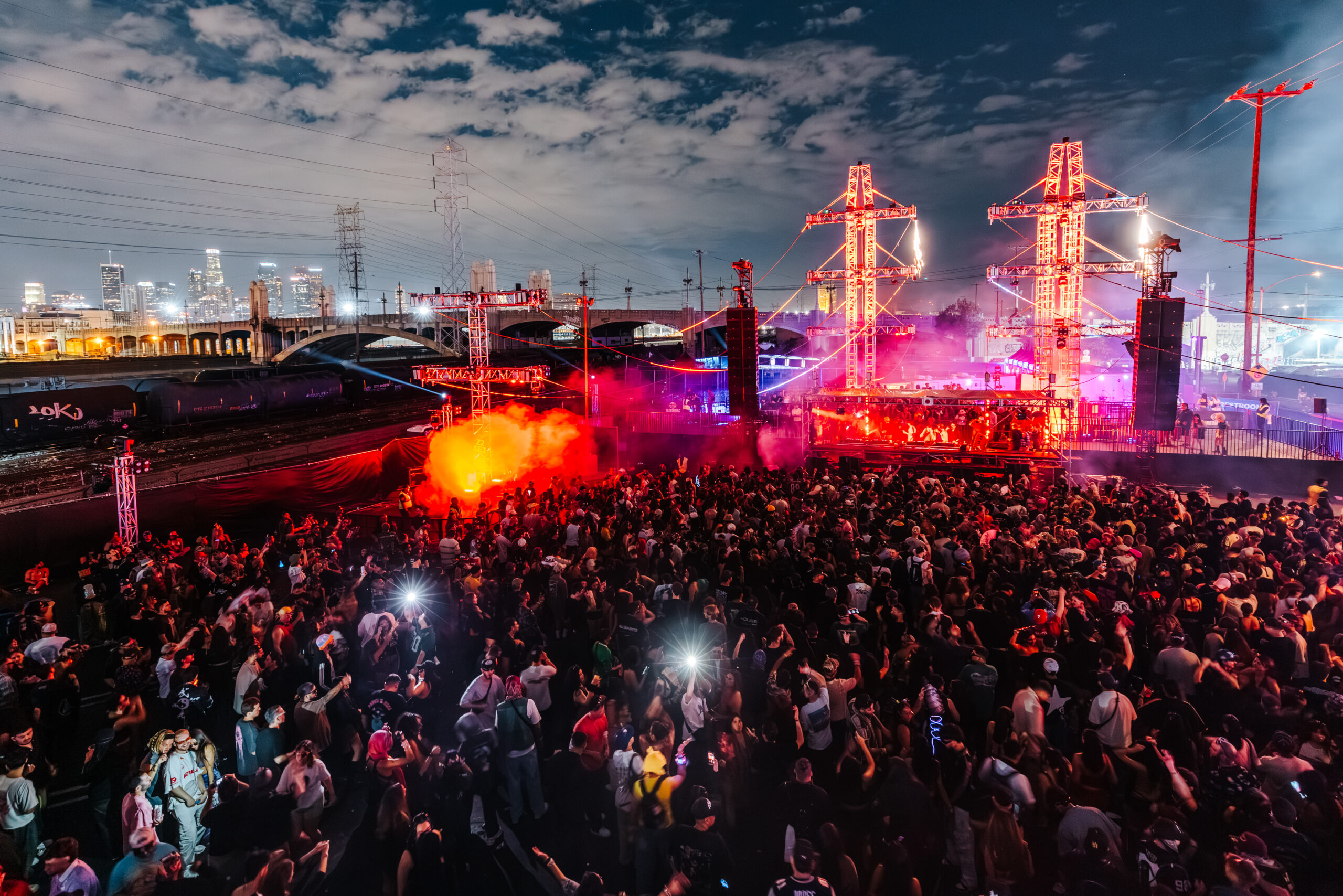
Production: A
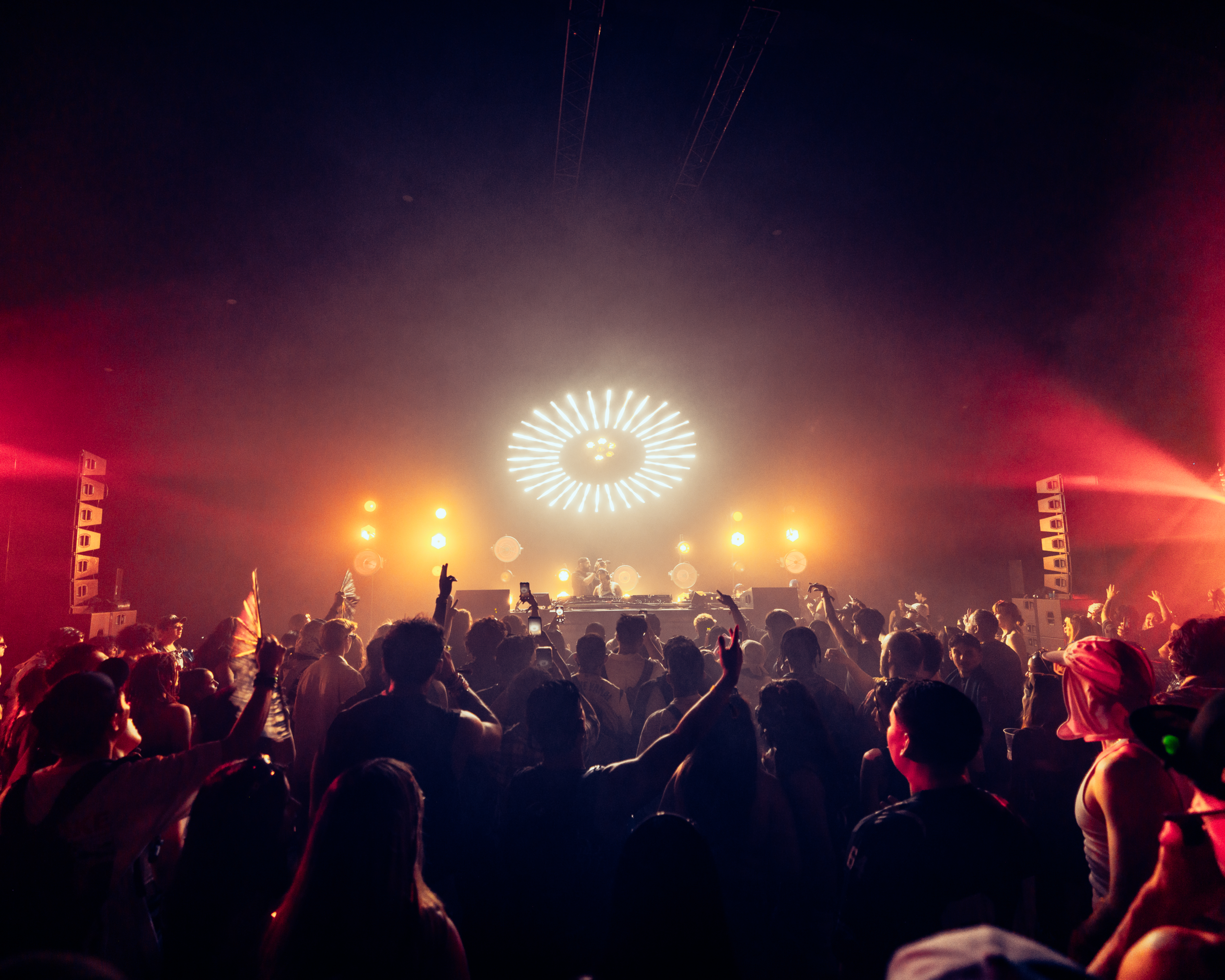
Putting sound and lighting design ahead of big LED video screens, show production across Skyline’s four stages cornered the sleek, minimal look beloved by house and techno heads. Stage designs were rooted in the surrounding landscape and packed an audiovisual punch.
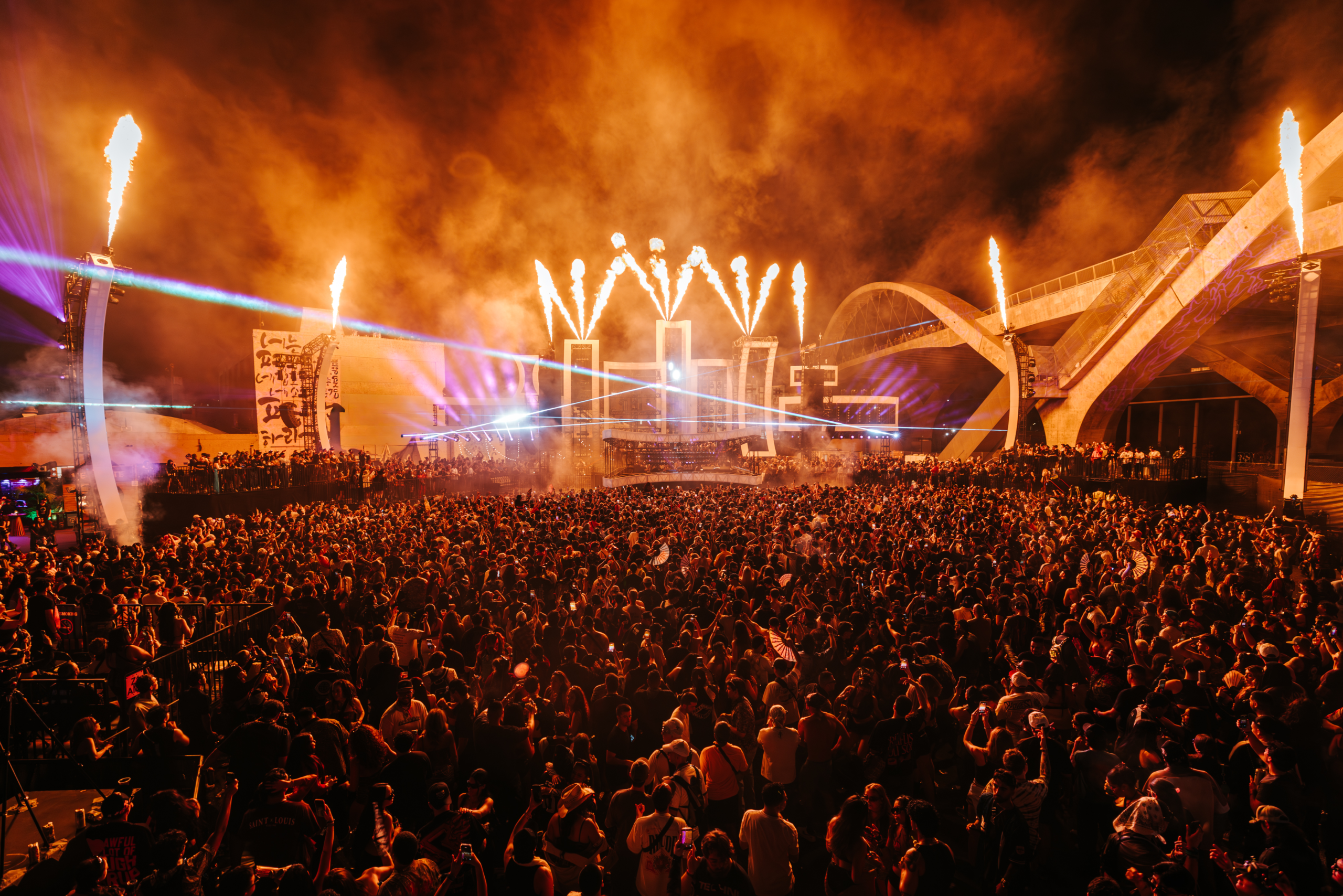
Sitting at the base of the 6th Street Bridge, Skyline’s main stage destination, East Side, featured a futuristic build inspired by the nearby overpass, topped with sky-high pyro and flanked by curved light towers and large platforms for Stage Access ticket holders.
During the day, the open concept offered a clear view of murals and street art on the buildings behind it (shoutout to Korean Rihanna), while criss-crossed lasers and projection mapping washed the bridge in trippy patterns at night. I Hate Models’ performance spared no expense on pyro.
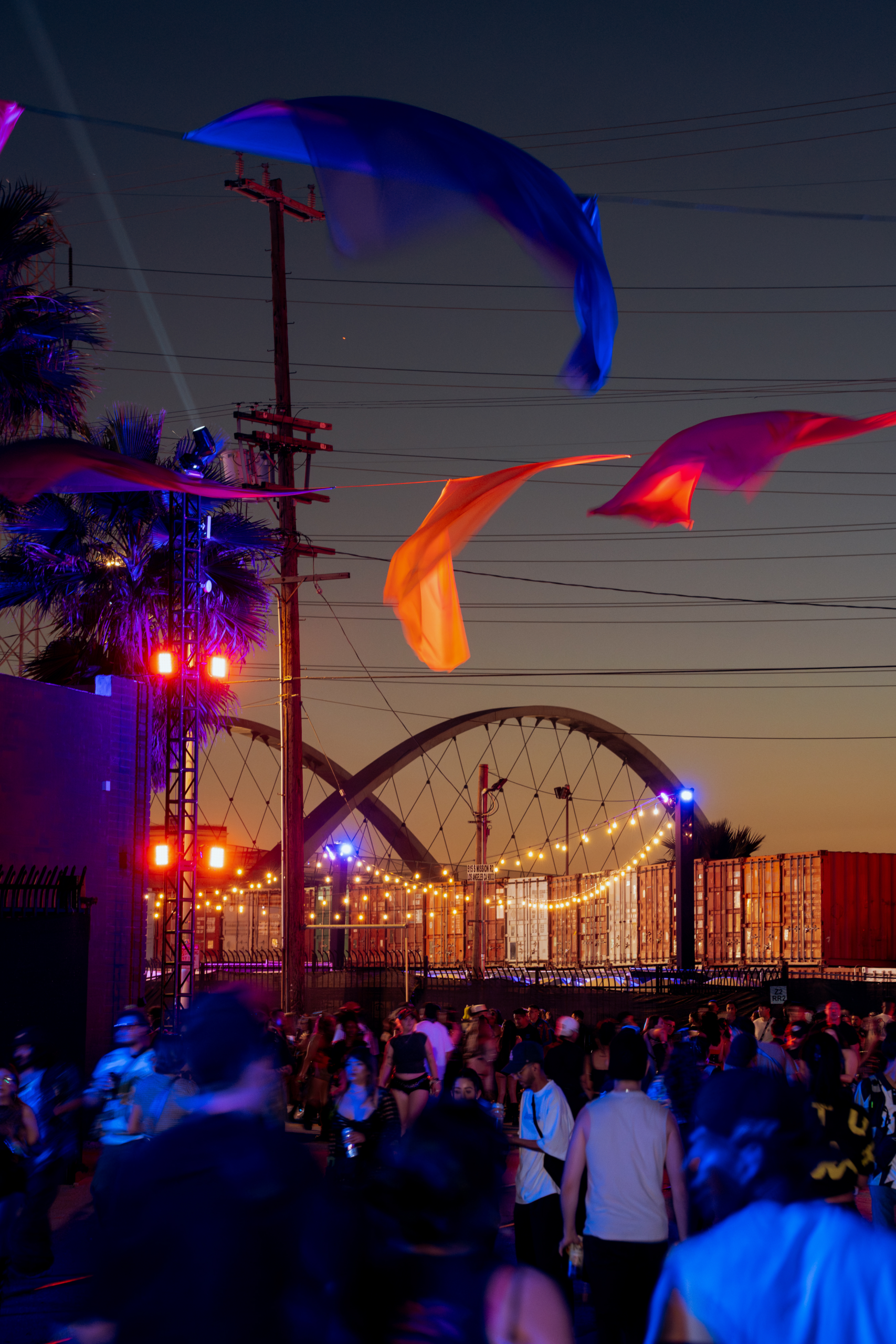
West Side, Skyline’s second-largest stage, occupied a parking lot next to the railroad that runs along the LA River and offered sweeping views of the 4th Street Bridge, the downtown skyline, and passing trains, horns blaring. Inspired by the transmission towers that sweep the city, the stage featured four skyward lighting rigs linked by LED cables, emulating the powerlines above the tracks just over the fence.
Elsewhere, the Resident Advisor-hosted Downtown stage was wedged between buildings on the festival site, featuring 360-degree audio, strobes, and haze machines that bathed dancers in light and sound. The indoor Arts District stage offered a warehouse experience, with flood and LED rigs running the length of the dance floor, and plenty of fog.
Volume was sufficient throughout the weekend, though it’s worth noting that crowd position significantly impacted the experience. Especially true at the RA stage (where speaker stacks encircled the crowd), you had to be dead center to really feel the bass in your body.
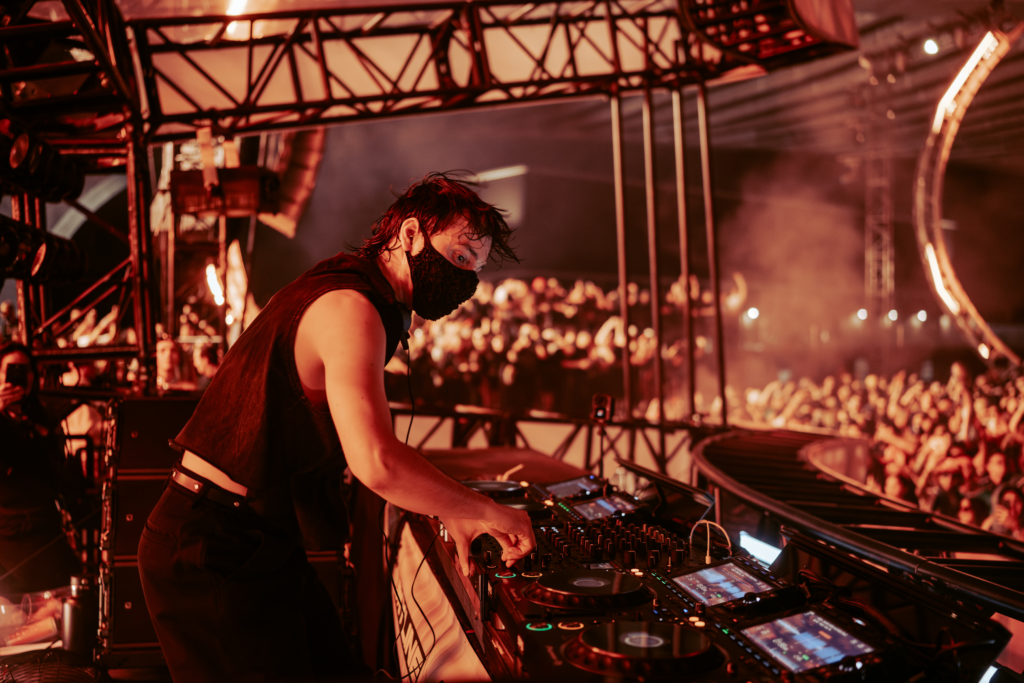
Music: A
One for the heads and high-speed dancers, Skyline’s 2026 program linked the LA underground’s grassroots figures with global superstars, industry veterans, and next-gen talents across a wide range of 4/4 styles.
On night one, techy up-and-comers Toman B2B Miguelle & Tons and clubland icons The Blessed Madonna B2B HAAi cruised to sunset at East Side ahead of gritty beats and minimal house grooves from Beltran, Dennis Cruz, and a heavyweight headline from Marco Carola B2B Chris Stussy.
Meanwhile, West Side invited bouncy European techno favorites, with key early sets from Fumi, DJ Seinfeld, and Quest, a fan-favorite B2B from Adrián Mills & Cloudy, and acid giants VTSS and 999999999. Resident Advisor brought diverse underground sounds—from UK bass and electro to footwork and jersey club—to the Downtown stage, featuring Nick León, tINI, Danny Daze B2B Ryan Elliot, Ben UFO, Avalon Emerson, Jyoty B2B Zack Fox, and more.
Night two welcomed several of techno’s present biggest names to East Side, including rising star Elli Acula, underground stalwart DJ Gigola, French sensation I Hate Models, and Dutch acid darling KI/KI. Headlining UK star Eli Brown met the moment with a 303-heavy set of his own.
Downtown, Resident Advisor showcased cutting-edge techno sounds from Los Angeles, Germany, and Detroit through performances by Sedef Adasï, MCR-T, SPFDJ, and Richie Hawtin, while West Side pumped deep house grooves from ChaseWest, Ahmed Spins, DJ Tennis B2B DJ Boring, and Italian titan Joseph Capriati, among others.
On both nights, Skyline’s Arts District stage had us absorbed in rare tunes from local selectors, including a masterclass in tension and chunky, soulful house grooves by Juliet Mendoza, and a tracklist of D&B and breaks from Star Eyes.
We have a feeling that years from now, several artists in the early slots will be playing the world’s biggest stages. With at least 10 hours of nonstop music on both days, this year’s bill underscored Los Angeles’ role as a cultural hub for artists from across the global club scene.
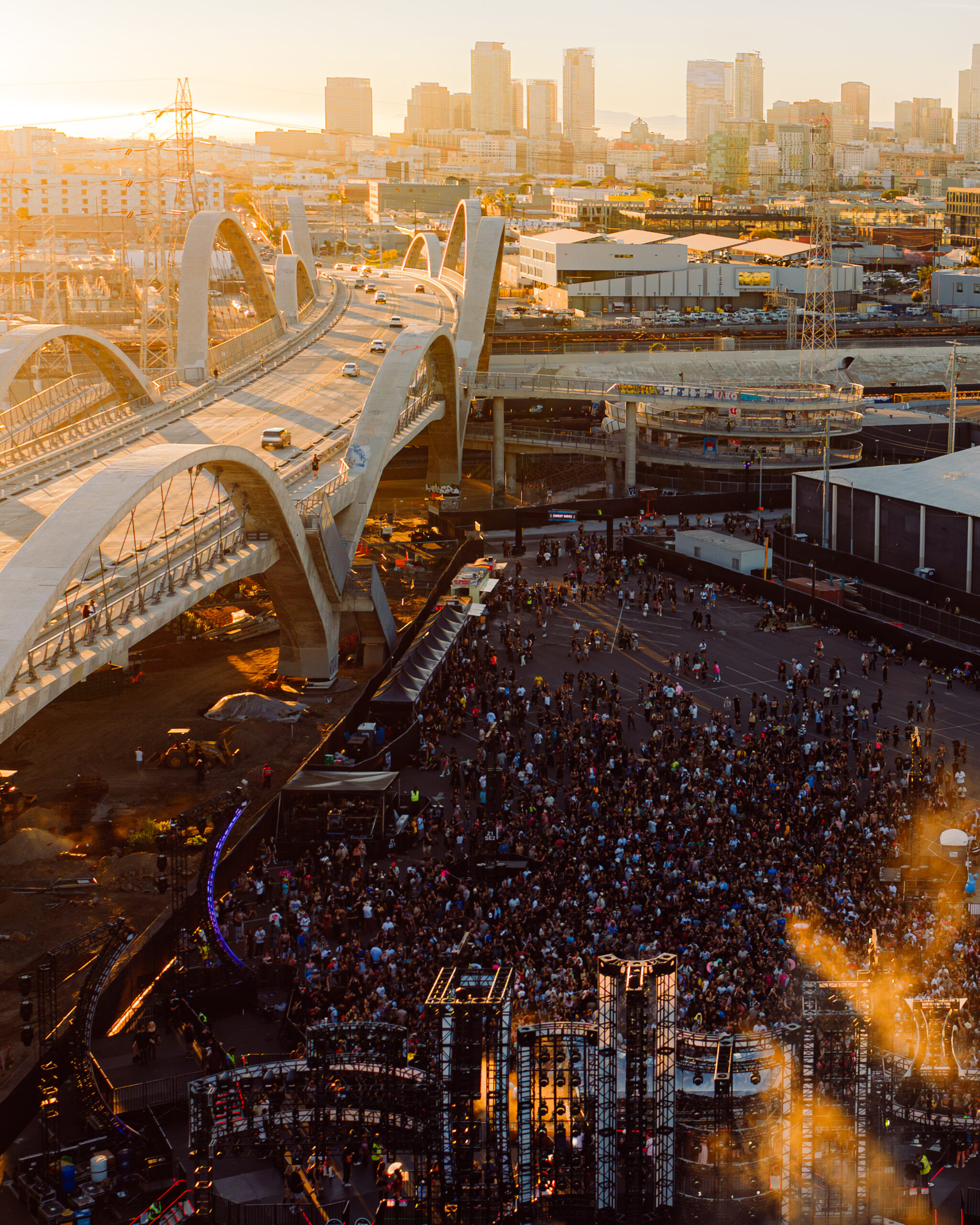
Venue: A
After five years, Skyline seems to have found a long-term home at Ace*Mission Studios. Smaller venues and inclement weather left fans wanting for simple dancefloor comforts in previous editions, but the massive warehouse campus gave this year’s festival room to add a new fourth stage, extend hours, and take the party indoors for the first time. In turn, ravers had the space, amenities, and a picturesque setting to experience the moment mindfully.
Originally built as a beverage distribution facility by Los Angeles’ influential Anderson family (whose Ace Beverage and Mission Beverage companies once held the exclusive rights to distribute Budweiser in the city), Ace*Mission Studios spans 18 acres of indoor-outdoor warehouse and soundstage space in Boyle Heights.
Typically used for film shoots, only a fraction of that footprint was used for Skyline, and with lots of possible venue configurations, it appears Insomniac is sticking around. Flyers around the festival revealed Eli Brown will be back for a headline show with Factory 93, as will Germany’s Time Warp.
When it comes to scouting new venues in downtown LA, the site is as good as it gets for a techno event of this size. Reflecting the LA underground’s embrace of outdoor and warehouse spaces across the city, the property sits along the Los Angeles River and a stone’s throw from the city’s famous Arts District, a neighborhood known as a historic incubator of alternative arts and culture.
Everywhere we looked, we were charmed by an industrial setting that felt true to Los Angeles techno’s urban roots. Graffiti and murals covered adjacent buildings and bridges, which offered late-afternoon shade during an unseasonably warm winter weekend in LA. Freight trains rolled past the West Side stage, and railway staff paused to take in the action. With gorgeous sunsets behind the downtown skyscrapers in the distance, Skyline truly lived up to its name.
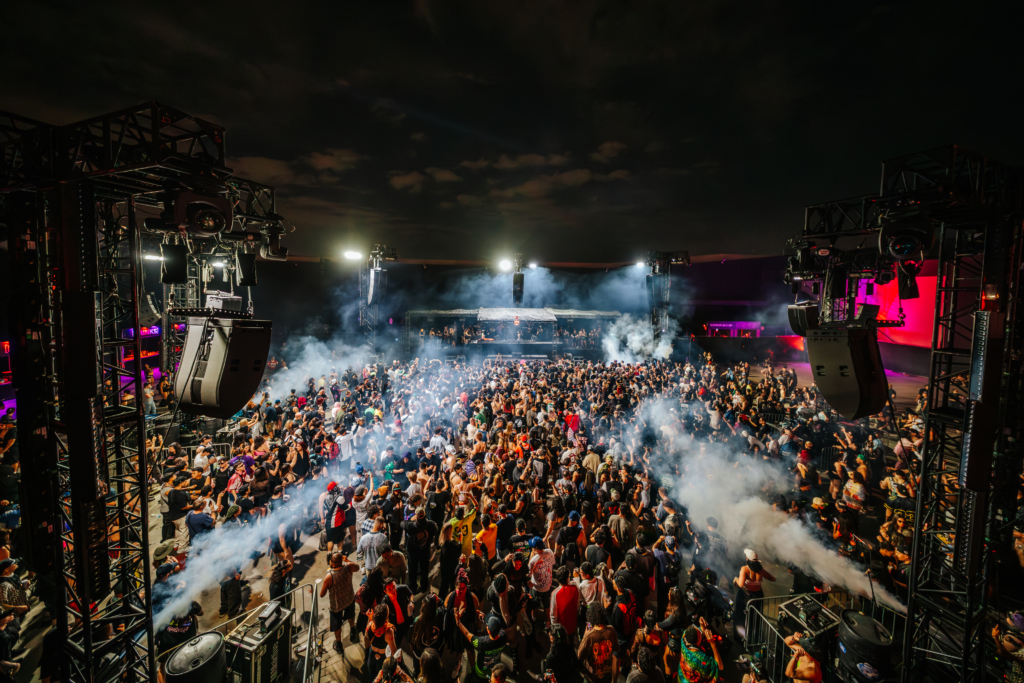
Situated a 10-minute drive from dozens of hotels and restaurants downtown, the venue was easily accessed via Ace*Mission Studios’ 4th Street entrance on both days. Most attendees arrived via rideshare or parked in nearby “Park N Shuttle” lots. Those who purchased stage access tickets had their own designated entry on Anderson Street.
When we got to the venue between 1PM and 4PM, there were no lines for entry. ID checks (Skyline is 21+), bag checks, and metal detector screenings were adequate. Once we got the lay of the land, navigating the venue was a breeze. Clearly marked crowd flow signage meant we were never stuck in traffic, and oversized dance floors handled the masses during headline sets.
Empty reusable water bottles and hydropacks were permitted and could be refilled at one of two central water stations inside the venue. For the first time in a long time, we were shocked by an abundance of restroom facilities—no waits, clean porta-potties, and fully stocked hand-washing stations.
The venue was fully ADA compliant, with all elevated platforms, including designated ADA viewing at the main stage, accessible via ramps. Three medical tents—at the entrance, West Side, and between East Side and the Arts District—were clearly marked and easily accessible.
Though bleachers placed around the venue were an improvement, there were limited designated spaces to sit comfortably. Nonetheless matching the renegade rave vibe, dancers in need of a break were forced to sit down on the concrete, lean up against walls, and construct cuddle puddles in warehouse corners.
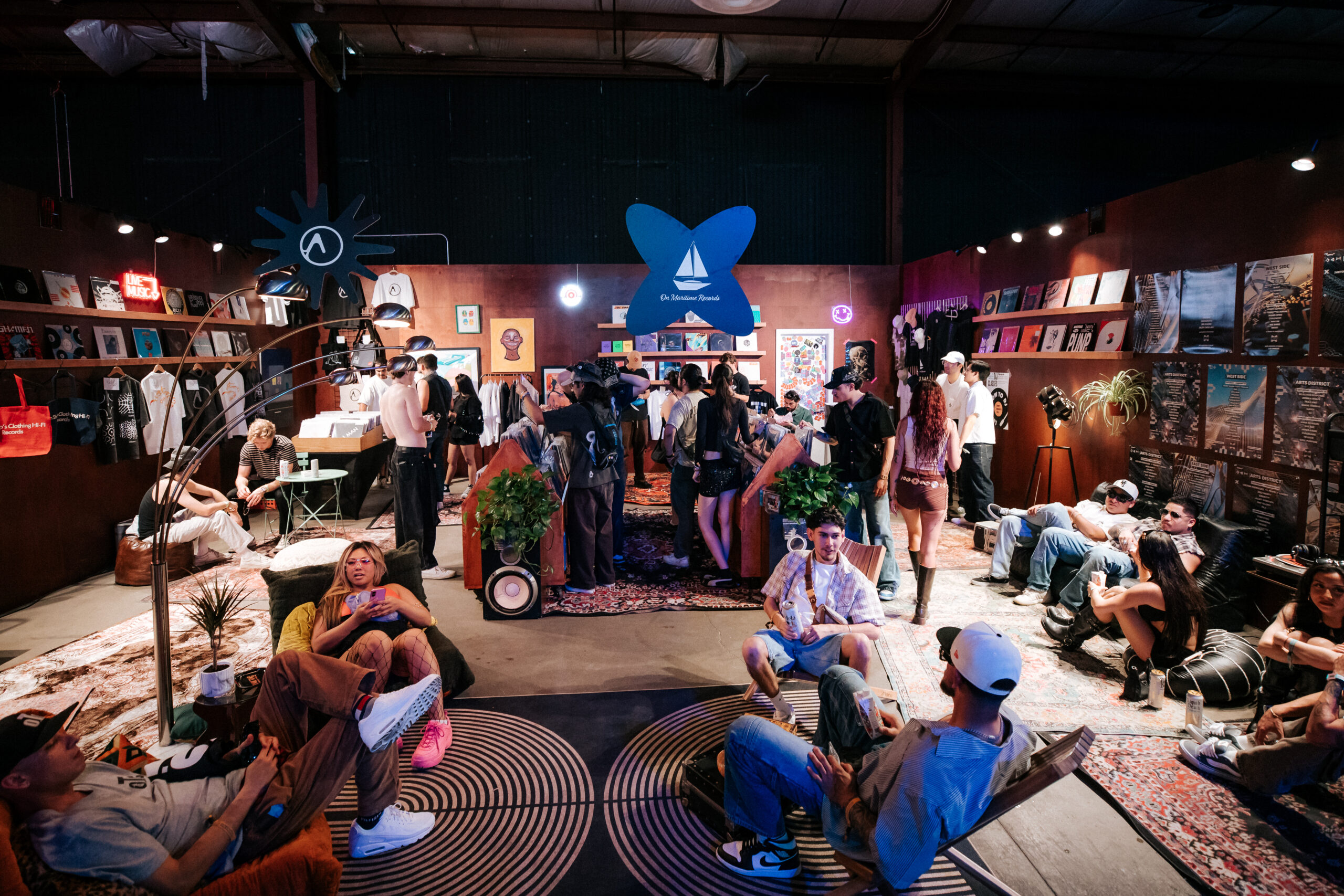
Elsewhere, the venue housed art installations and booths from local food and merchandise vendors. In addition to the Arts District stage, its central warehouse had picnic tables, festival merch booths, brand activations, and a pop-up from several local record stores. Lockers and phone-charging were available for a fee.
Sidequest-ability: B-
In line with many house and techno festivals, Skyline placed the focus on the dance floor rather than art installations and experiential activations. But that doesn’t mean we didn’t explore—it just changed the way we did.
Sometimes, sidequesting is a mindset, and if you wanted to tap in, all you had to do was look up. Beautiful views of LA’s raw architecture and stage production that interacted with the environment captured our attention and offered moments of awestruck reflection. Around the venue, other, more action-based activities offered a different kind of escape.
Alongside sponsored activations and vendor booths from Beatbox, Ghost, and Eargasm, Skyline welcomed setups from local art vendors along a main row of food trucks, bleacher seating, and an art installation. Indoors, in the Arts District stage lobby, the festival merch booth sold event tees, hoodies, hats, and other essentials, plus a new clothing collab with Von Dutch.
Built to look like a freestanding store, the new vinyl market sold records and merch from local record shops, with comfy seating, turntables, and headphones for listening. We longed for more designated spaces for the GA crowd to sit and chill, and expanding the vinyl market could be a cool way to accomplish that.
Food & Beverage: B-
Skyline’s food and beverage options were fairly limited compared to larger events, but with festival hours from 1PM to midnight on night one and 1PM to 11PM on night two, unless you arrived right at doors, most attendees were only on the hook for one meal or late-night bites.
All food options were local to SoCal, including taco trucks, pizza, hot dogs, burgers, ramen, juices, smoothies, fresh fruit, ice cream, and other basic fare. Specialty menus, including gluten-free and vegan items, were available from Savory Times, Get the Cluck Outta Here, Cena Vegan, Fresh N’Juicy, and Irv’s Burgers. We waited 25 minutes for tacos at peak dinner time on night one, but everything else was quick and easy. Prices ranged from $10 to $30.
With 15 bar areas, we never encountered waits for drinks. Alcohol partners included Beatbox, Ghost, White Claw, Michelob Ultra, and Smirnoff, among others. Non-alcoholic drinks, such as Hiyo “social tonics,” Liquid Death canned tea and water, coffee, espresso, lattes, matcha, and hot chocolate were also available.
Prices remained consistent with other Insomniac festivals in California. Canned water was sold for $5. Twenty-four-ounce craft and imported beers cost $17.50, and domestics cost $15.50. Tall-boy seltzers were sold for $19. Liquor and mixed drinks ran $16.50 for a single shot and $28 for a double. Four specialty cocktails were priced between $18.50 and $19.50. All prices are pre-tax.
Overall: A
In its first year at Ace*Mission Studios, Skyline checked off all the essentials and delivered unique, defining moments. A wealth of corporate resources, financial and otherwise, go into creating an event of this caliber, yet sonically and visually, the festival managed to wrap up the raw heart of the LA underground in a seamless festival experience.
Skyline 2026 was comfortable, spacious, high-production, and amassed a far-reaching lineup of revered global DJ talent rarely offered at this scale in the U.S. When it is, you’ll find it in LA. We’ll be back.
Explore EDM Maniac‘s complete Festival Report Card archive here.
Featured image courtesy: Insomniac Events. Credit: Jamal Eid.